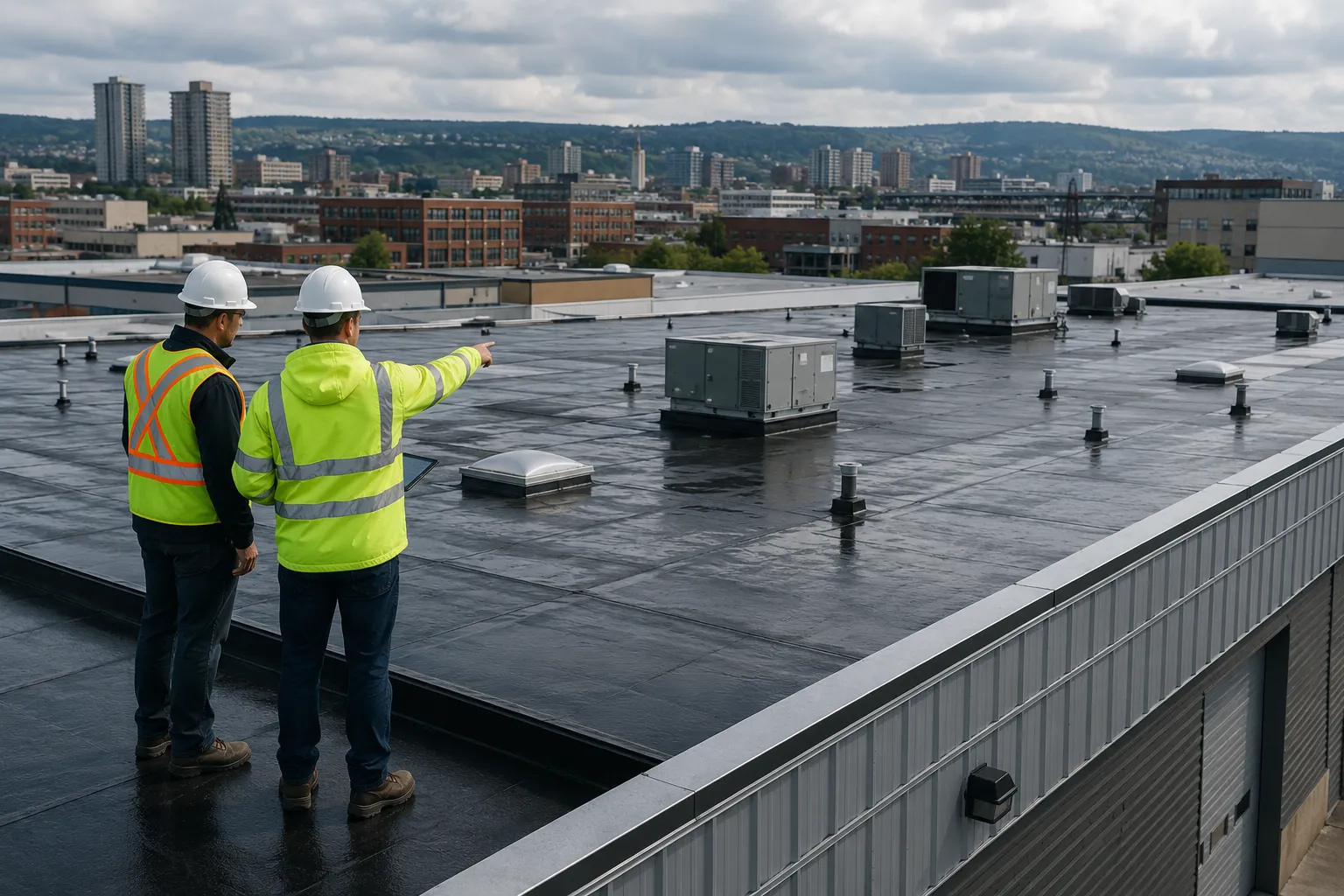
Commercial property owners in Hamilton face roofing challenges that can significantly affect long-term building performance. Seasonal freeze and thaw cycles, heavy snow accumulation, and summer heat all place stress on commercial roofing systems over time. Selecting the right roofing material is not only about installation cost but also durability, maintenance demands, and long-term operational value.
Understanding how different roofing systems perform in Hamilton’s climate can help building owners make more informed decisions when planning repairs or replacements.
Comparing Common Commercial Roofing Systems
Several roofing systems are commonly used on commercial and industrial properties throughout Ontario. Each offers different advantages depending on the building’s size, usage, and maintenance requirements.
TPO Roofing Systems
TPO roofing systems are popular for commercial flat roofs because they provide strong UV resistance and reflective performance during warmer months. The material’s heat-reflective surface may help reduce rooftop temperatures and improve energy efficiency for larger facilities.
TPO membranes are also known for welded seams that help reduce the risk of water penetration. These systems are commonly installed on warehouses, retail buildings, and industrial facilities with large roof surfaces.
EPDM Commercial Roofing
EPDM commercial roofing uses a synthetic rubber membrane designed to handle changing weather conditions. In Hamilton’s climate, EPDM performs well because the material remains flexible during colder temperatures and freeze-thaw cycles.
This system is often selected for industrial roofing systems where durability and relatively straightforward maintenance are priorities. EPDM roofs can also be easier to repair when isolated damage occurs.
Modified Bitumen Roofing
Modified bitumen roofing combines asphalt-based materials with reinforced layers that improve waterproofing protection. The multi-layer design offers good durability for commercial buildings that experience regular rooftop traffic or equipment servicing.
Because these systems are built for strength and weather resistance, they are often used on older commercial buildings and facilities requiring additional puncture protection.
Roofing Performance in Hamilton Climate Conditions
Hamilton’s climate places consistent stress on flat roofing systems throughout the year. Freeze and thaw cycles are especially important because trapped moisture can expand during winter temperatures and gradually damage roofing materials.
Snow accumulation also affects roof performance. Commercial roofs must support snow loads while maintaining proper drainage as temperatures rise. Poor drainage can lead to ponding water, which may shorten the lifespan of many roofing systems.
Summer heat and UV exposure create additional wear over time. Reflective systems such as TPO roofing systems may help reduce heat absorption on large industrial and commercial buildings.
Regardless of roofing material, proper drainage design and routine inspections remain essential for long-term performance.
Cost, Lifespan, and Maintenance Considerations
Roofing decisions should be evaluated based on long-term value rather than upfront installation costs alone.
TPO systems are often chosen for their balance of energy efficiency and moderate installation costs. EPDM commercial roofing is valued for flexibility and durability in colder climates. Modified bitumen roofing may involve higher installation costs but can provide strong protection in high-traffic commercial environments.
Maintenance requirements also vary between systems. Some roofs require more frequent seam inspections, while others may need additional surface maintenance as they age. Preventative inspections can help identify minor issues before they become larger structural problems.
Repair Versus Replacement Decisions
Not every roofing issue requires a full replacement. Commercial flat roof repair may be appropriate when damage is limited to isolated leaks, flashing details, or drainage components.
However, repeated leaks, widespread membrane deterioration, or moisture trapped within insulation layers may indicate that replacement is the more cost-effective option. Roof age also plays an important role when evaluating whether continued repairs remain practical.
Scheduling inspections after major storms or winter seasons can help property owners identify damage early and avoid larger repair costs later.
Choosing the Right Commercial Roofing Contractor
Selecting the right contractor is an important part of any roofing project. Commercial roofing requires specialized experience, safety planning, and knowledge of industrial building requirements.
Property owners should look for contractors with experience handling commercial and industrial roofing projects similar in size and complexity to their facilities. Licensing, insurance coverage, and familiarity with local climate conditions are also important considerations.
Working with professionals experienced in commercial roofing Hamilton projects can help building owners evaluate roofing systems based on local weather exposure, maintenance expectations, and long-term operational goals.
A well-planned roofing system can improve durability, reduce maintenance disruptions, and support better long-term building performance. By understanding how TPO, EPDM, and modified bitumen systems perform in Hamilton’s climate, commercial property owners can make more informed decisions for future repair and replacement planning.