Picture this: you’ve just moved into a home with a beautiful backyard, but every time you step outside, you feel like you’re on display for the whole neighborhood. Or maybe your kids and pets keep drifting toward the street, and you’re tired of chasing them. Perhaps you’re getting ready to sell and want to add that finishing touch that makes buyers stop and take notice from the curb.
Whatever your situation, fencing is one of the most versatile and high-return investments a homeowner can make. It’s not just about drawing lines on a property. It’s about creating a private retreat, strengthening your home’s security, boosting curb appeal, and ultimately increasing what your property is worth.
The challenge most homeowners face isn’t whether to install a fence, but which fence is right for their goals, budget, and environment. The market has expanded considerably in recent years, with providers like FenceCraft among the companies responding to growing demand for more durable, design-forward fencing solutions. This guide breaks down everything you need to know to make the right choice.
Why Fencing Matters for Property Owners
A fence does a lot of heavy lifting. Done right, it quietly solves multiple problems at once: privacy, safety, aesthetics, and boundary definition, without requiring constant attention. Done wrong, it becomes a maintenance burden and an eyesore that chips away at your property’s value.
At InfoActivePropertyCare, we’ve found that homeowners tend to underestimate just how much the right fence transforms how they use and feel about their outdoor space. A well-chosen fence doesn’t just mark where your property ends; it defines how your home presents itself to the world.
Benefits of Installing a Fence
Before comparing types, it’s worth understanding what you’re actually buying when you invest in a fence:
Privacy: A solid fence screen creates a genuine sense of enclosure that changes how you use your yard. Outdoor dining, morning coffee, or kids’ playtime all feel different when you’re not visible to every passerby.
Security: Fences create a clear perimeter that deters opportunistic entry. They’re not impenetrable, but they add a meaningful barrier and signal that a property is actively maintained and cared for.
Aesthetics and curb appeal: The right fence frames your home. It ties the landscaping to the architecture, adds structure to the front yard, and gives the whole property a polished, finished look.
Pet and child containment: This is one of the most practical benefits, and often what pushes homeowners to finally commit to installation. A fenced yard means kids can play and dogs can run without constant supervision near roads or neighboring properties.
Property value: Multiple real estate studies have shown that a well-maintained fence increases perceived and actual home value, particularly in family-oriented neighborhoods.
Wooden Fences: Advantages and Considerations
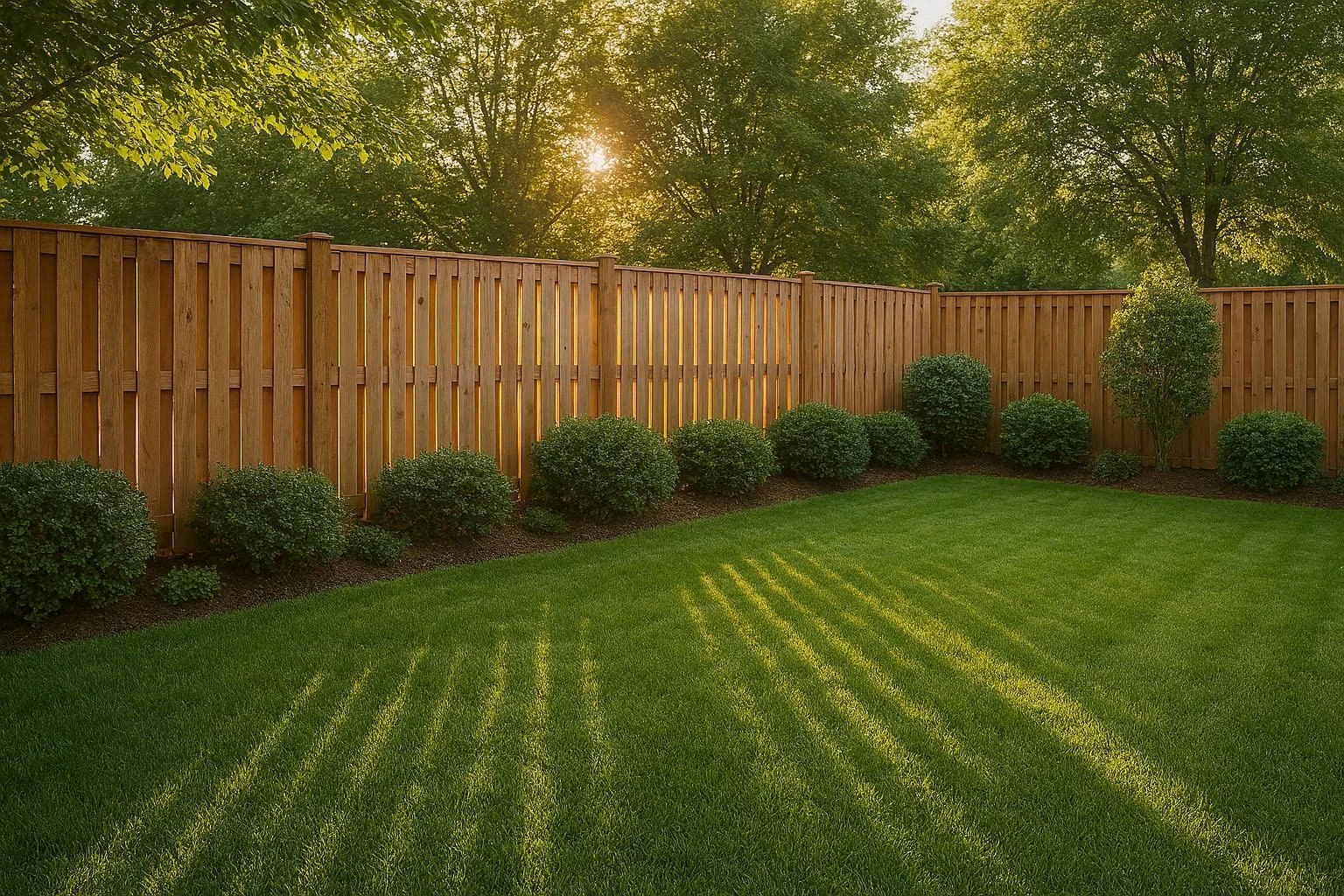
Wood has been the go-to fencing material for generations, and for good reason. It’s warm, natural, highly customizable, and capable of fitting virtually any architectural style, from rustic farmhouses to contemporary suburban homes.
What Makes Wood Work
The visual appeal of wood is hard to replicate. It can be stained, painted, or left natural, giving homeowners enormous control over the final look. Popular styles include board-on-board for maximum privacy, picket fencing for traditional curb appeal, and split-rail for a more open, rural aesthetic.
From a construction standpoint, wood is workable and adaptable. It’s easier to cut around irregular terrain, install on slopes, and customize to unique property shapes than most other materials.
What to Plan For
Wooden fences require consistent maintenance. In most climates, that means sealing or staining every two to three years to prevent moisture damage and UV degradation. Without it, wood will gray, crack, and eventually rot, especially at the post bases where moisture collects.
Lifespan varies considerably by wood species and maintenance habits. A well-maintained cedar or redwood fence can last 20 years or more. Pressure-treated pine is more affordable but typically has a shorter attractive lifespan. In many outdoor improvement projects we’ve observed, homeowners underestimate the ongoing maintenance commitment and are disappointed by how quickly an unmaintained wooden fence deteriorates.
Best For
Homeowners who want maximum customization, are committed to regular upkeep, and prefer a natural aesthetic that blends with landscaping.
Aluminum Fences: Modern Durability and Security
Aluminum has become one of the most popular fencing materials over the past two decades, and once you understand why, it’s hard to argue against it for the right application.
Low Maintenance, Long Life
The single biggest advantage of aluminum is that it essentially maintains itself. It doesn’t rust, doesn’t rot, and doesn’t need painting or staining. A quality aluminum fence installed today should still look the same in 30 years with nothing more than an occasional rinse.
This makes aluminum particularly appealing in coastal and humid climates where wood and steel fences face accelerated degradation. It also appeals to property owners who want a sharp-looking fence without building ongoing maintenance into their schedule.
Appearance and Versatility
Modern aluminum fencing has shed its utilitarian image. Today’s designs range from traditional wrought-iron looks (without the corrosion issues) to sleek, contemporary horizontal styles. Powder coating options mean you can match virtually any exterior color scheme.
From our property care experience, aluminum is one of the easiest materials to integrate into a broader landscape design because it’s open by nature. It defines a boundary without visually blocking it, which can actually make a yard feel larger.
What Aluminum Doesn’t Do Well
Aluminum’s open design means it provides minimal privacy. It’s excellent for security and boundary definition, but if your goal is a secluded backyard, you’ll need to pair it with landscaping or choose a different material entirely. It’s also more expensive upfront than wood, though the lower lifetime maintenance cost typically closes that gap over time.
Best For
Properties where security and boundary definition matter more than privacy, or where low-maintenance durability is the priority.
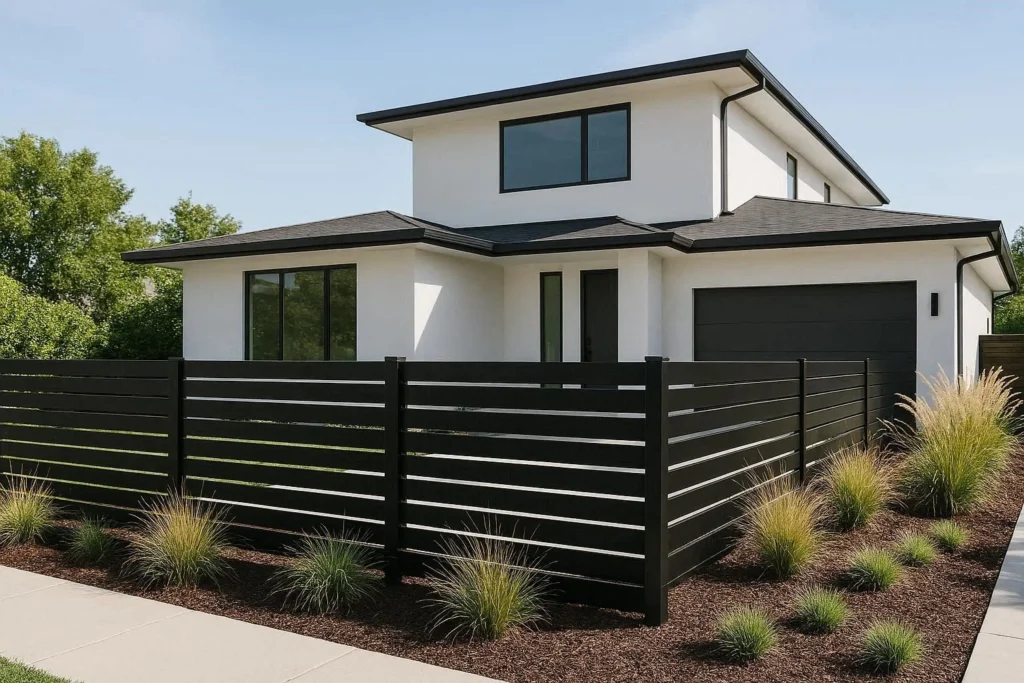
Living Fences: Natural Beauty and Sustainability
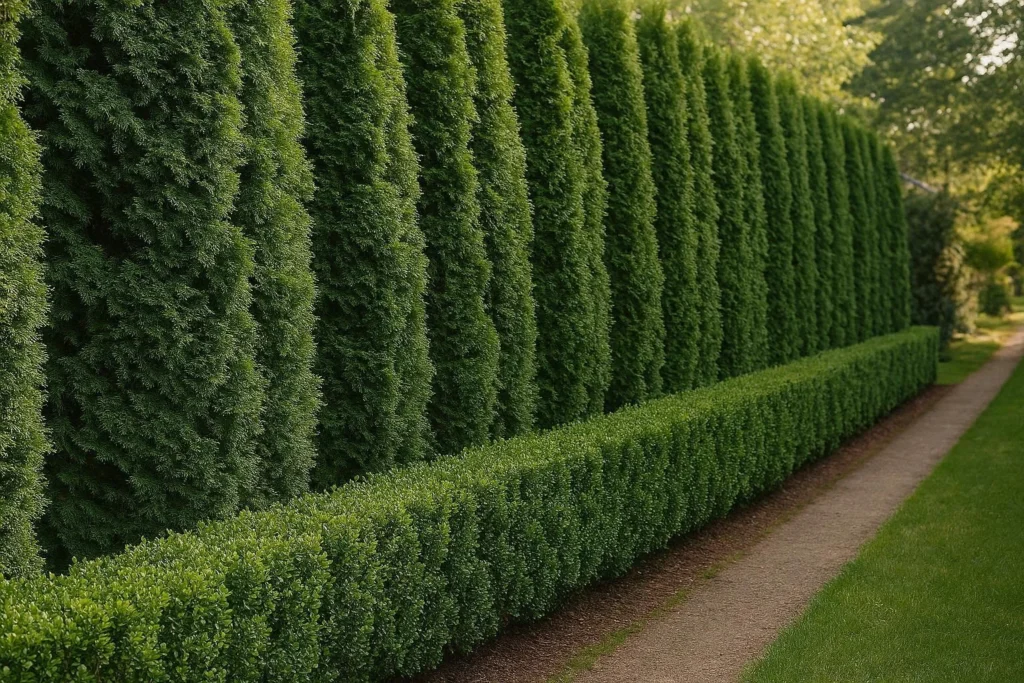
A living fence, made of hedges, shrubs, ornamental grasses, or climbing plants, is an increasingly popular alternative to traditional materials, and in many ways, it delivers something that wood and aluminum simply can’t: a fence that improves with age.
What a Living Fence Can Do
Well-chosen plants create dense, layered screens that provide excellent privacy once established. Evergreen shrubs like arborvitae, holly, and boxwood maintain coverage year-round. Deciduous options like lilac or privet offer seasonal variety. Fast-growing options like Leyland cypress or bamboo (in contained settings) can establish significant privacy within two to three growing seasons.
Beyond privacy, living fences deliver genuine environmental benefits. They support pollinators, reduce noise, improve air quality, and help manage stormwater runoff. They also add significant visual richness to a property in a way that manufactured materials can’t replicate.
Honest Considerations
Living fences take time. If you need immediate privacy, a planted screen won’t deliver it. They also require more active management than most homeowners expect. Regular pruning is essential to maintain shape and density, and some species can become invasive if not properly selected and managed.
Homeowners often discover that a living fence requires more horticultural knowledge than they anticipated. Choosing the wrong species for your soil, climate, or light conditions can result in patchy, struggling plants rather than the lush screen you imagined.
Best For
Homeowners with patience, an interest in landscaping, and a goal of integrating fencing seamlessly into the natural environment. Often works beautifully as a complement to a structural fence rather than a standalone solution.
For more ideas on integrating plants and natural elements into your outdoor space, explore our yard and garden guide by ActivePropertyCare.
Comparing Fence Types: A Practical Overview
| Feature | Wood | Aluminum | Living Fence |
|---|---|---|---|
| Upfront Cost | Low–Medium | Medium–High | Low–Medium |
| Maintenance | High | Very Low | Moderate–High |
| Privacy Level | High | Low | Medium–High (once established) |
| Durability | 15–25 years | 30+ years | Indefinite (with care) |
| Appearance | Warm, classic | Elegant, open | Natural, organic |
| Best Climate | Dry climates | Any (especially coastal) | Varies by species |
| Installation Speed | Fast | Fast | Slow (establishment period) |
Common Fencing Mistakes Homeowners Make
Even experienced property owners make these errors. Knowing them in advance saves time, money, and frustration.
Not checking property lines first. Installing a fence a few inches over a property line can create serious legal complications with neighbors. Always get a survey before breaking ground.
Ignoring local codes and HOA rules. Height restrictions, material requirements, and setback rules vary widely by municipality and neighborhood association. Permits are often required and skipping them can result in forced removal.
Prioritizing style over function. A beautiful aluminum fence won’t give you the backyard privacy you were hoping for. Define your primary goal first, then find a style that meets it.
Underestimating wood maintenance. The most common regret we hear from homeowners is choosing wood for its lower upfront cost and then finding the ongoing maintenance more demanding than expected.
Not thinking about gates carefully. Gate placement, swing direction, and hardware quality matter enormously for daily usability. A gate that’s awkward to use or fails after a few years undermines the whole fence.
How Fencing Impacts Property Value
The relationship between fencing and property value is nuanced but consistently positive when the installation is appropriate and well-maintained.
In residential markets, a fence that solves a real problem, privacy in a dense neighborhood, containment for a young family, a defined front yard in an open streetscape, adds tangible value because it solves the same problem for a future buyer. Real estate professionals consistently note that a well-maintained fence photographs well and contributes to the first impressions that drive purchase decisions.
Our property improvement observations suggest that the best return comes from fences that feel intentional: matched to the home’s architecture, integrated with the landscaping, and clearly well-maintained. A sagging, weathered wooden fence, by contrast, can actually detract from value by implying deferred maintenance across the property.
The material matters less than the condition and appropriateness. A cedar fence that’s been consistently stained and sealed will add more value than a neglected aluminum one.
For a broader view of how outdoor improvements affect home value, see our complete estate and property tips from ActivePropertyCare.
Fence Maintenance Best Practices
Regardless of material, a few habits will extend the life of any fence considerably:
- Inspect annually. Walk the fence line each spring looking for loose posts, damaged boards, rust spots, or pest activity. Catching problems early prevents them from cascading.
- Keep vegetation clear. Climbing plants and overgrown shrubs hold moisture against fence materials and accelerate deterioration. Maintain at least a few inches of clearance.
- Address wood promptly. Sand and reseal any areas where finish has worn through before moisture can penetrate. A small repair is far cheaper than replacing rotted boards.
- Check post bases. This is where wooden fences most commonly fail. If a post is showing early rot at the base, a post repair bracket can stabilize it without full replacement.
- Clean aluminum periodically. Aluminum needs little maintenance, but an annual rinse removes pollen, grime, and road salt that can dull the finish over time.
- Prune living fences seasonally. Most hedge species benefit from at least one annual shaping, with many requiring two to three trims per year to maintain density and appearance.
For a full seasonal maintenance checklist across all areas of your property, our how-to guides at ActivePropertyCare are a useful ongoing resource.
Final Thoughts
The right fence is one of those rare home improvements that pays dividends on multiple fronts simultaneously. It makes your outdoor space more usable, your home more secure, your property more attractive, and your investment more valuable over time. Whether you’re drawn to the warmth of wood, the durability of aluminum, or the organic beauty of a living fence, the key is matching your choice to your actual goals and being honest about the maintenance commitment each option requires.
Take the time to walk your property line, define what you actually need, and consult professionals before making a final decision. A fence that’s right for your neighbor’s property may be entirely wrong for yours.
Explore more outdoor property improvement and maintenance guides on InfoActivePropertyCare.