
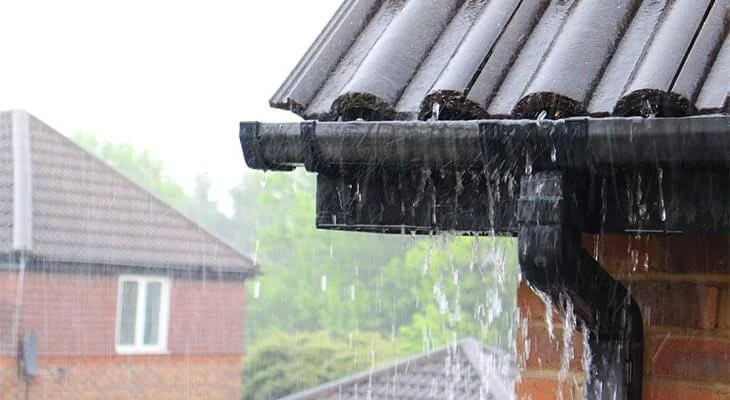
It usually starts with something small. A heavy rain rolls through, and instead of draining quietly off the roof, water starts spilling over the edge of the gutter in a steady sheet. A few days later, you notice a soggy patch of soil along the foundation, or a section of mulch that has washed halfway across the flower bed. Maybe there’s a faint water stain creeping down the siding near a downspout that never seemed to drain properly.
None of this looks dramatic at first. That’s exactly why gutter problems are so easy to ignore until they aren’t.
Gutters are one of the simplest systems on a home’s exterior, but they do a lot of quiet work. Their job is to collect rainwater running off the roof and move it away from the parts of the property that are most vulnerable to moisture: the foundation, the siding, the landscaping beds, and the ground immediately surrounding the structure. When that system is clogged, damaged, or poorly installed, water stops going where it’s supposed to and starts going wherever gravity takes it instead.
This guide is meant to help homeowners and property managers understand how gutters fit into the bigger picture of property care, not just as a once-a-year chore, but as an ongoing part of protecting a home’s drainage, foundation area, and landscaping. Companies across the gutter-service industry, from small local crews to established names like Like New Gutters, all exist because this single system has an outsized effect on long-term property health. The goal here isn’t to promote any one provider. It’s to help you understand what your gutters are doing, what can go wrong, and what to actually do about it.
Why Gutters Matter to Overall Property Care
A well-functioning gutter and downspout system helps manage where rainwater goes once it leaves the roof. That sounds simple, but it has ripple effects across several parts of a property:
- Foundation area protection. Gutters that discharge water away from the home reduce the amount of water pooling directly against the foundation walls.
- Reduced soil erosion. Controlled runoff means less water cutting channels through mulch beds, lawns, and sloped areas.
- Exterior wall protection. Directing water away from siding and trim helps limit prolonged moisture exposure on painted or wood surfaces.
- Landscaping preservation. Plant beds, edging, and turf near the foundation are less likely to be disturbed by concentrated runoff.
- Support for overall drainage. Gutters work alongside grading, downspout extensions, and yard drainage to move water where it belongs.
It’s worth being clear about what gutters can and cannot do. A properly functioning gutter system is one part of a home’s water-management strategy, not a complete solution on its own. Foundation and drainage problems are often caused by a combination of factors, including grading, soil type, and site conditions. Gutters play a supporting role rather than acting as a standalone fix.
How Neglected Gutters Can Cause Property Problems
When gutters are ignored, the effects tend to build slowly, which is part of what makes them easy to underestimate.
Clogged gutters fill with leaves, twigs, and granules from roofing shingles. Once blocked, water has nowhere to go but over the edge, which defeats the entire purpose of the system.
Overflowing gutters send water down exterior walls instead of through the downspouts. Over time, this repeated exposure can contribute to staining, paint deterioration, or wood damage on siding and trim.
Detached or sagging gutters happen when hangers loosen, often from the weight of trapped debris or ice. A sagging section holds standing water instead of moving it along, adding stress to the whole run.
Damaged downspouts that are dented, disconnected, or discharging too close to the foundation can undermine the entire system, even if the gutters themselves are clean and in good shape.
Standing water and poor drainage near downspout outlets can contribute to soft, saturated soil close to the home.
These issues are connected to several potential downstream problems:
- Fascia and soffit damage from prolonged moisture exposure
- Erosion in landscape beds and along walkways
- Exterior staining or discoloration on siding
- Increased moisture near basement or crawlspace areas
- Drainage concerns in the immediate foundation zone
It’s important to note that these are potential risks, not guaranteed outcomes. A home with a clogged gutter for a few weeks isn’t automatically headed for foundation damage. But over months and years, neglected gutters are a recurring theme in property-care assessments where water intrusion or erosion has become a real issue. Since gutter problems and roof problems often go hand in hand, it’s also worth reviewing our essential roof maintenance tips alongside your gutter inspection.
Gutter Cleaning and Maintenance Checklist
A thorough gutter check covers more than just scooping out leaves. Here’s a practical checklist to work through:
- Remove leaves, twigs, and debris from the gutter channel
- Check that water flows freely toward the downspouts (gutter slope)
- Inspect seams and joints for gaps or separation
- Examine hangers and brackets for looseness or rust
- Look at the fascia board behind the gutter for soft spots or staining
- Run water through downspouts to test for blockages
- Check that downspout extensions direct water well away from the foundation
- Look for rust spots, cracks, or small holes along the gutter run
Expert insight: A common property-care mistake is cleaning the visible debris out of the gutter but never actually testing whether water moves through the downspout. A gutter can look clean and still be blocked lower down in the downspout elbow, which is often where the real clog is hiding.
If a property has steep rooflines, multiple stories, or gutters that are difficult to reach safely, this is a reasonable point to bring in a professional rather than working from an extension ladder.
How Often Should Gutters Be Cleaned?
There isn’t one universal answer, because cleaning frequency depends on several site-specific factors:
- Trees near the property. Homes surrounded by mature trees, especially pines or trees that drop debris throughout the year, may need more frequent attention than homes with minimal tree cover.
- Local weather patterns. Areas with heavy seasonal rainfall or frequent storms put more demand on a gutter system.
- Roof design. Roofs with multiple valleys tend to funnel more debris into fewer gutter sections.
- Gutter size and capacity. Undersized gutters clog and overflow more easily than properly sized ones.
- Surrounding landscaping. Overhanging branches or nearby shrubs can contribute additional debris.
- History of clogging. A gutter system with a track record of blockages likely needs a shorter inspection interval going forward.
As a general starting point, many homeowners check their gutters at least twice a year, typically in late spring and again in fall, then adjust from there based on what they observe. Properties with heavy tree cover may need quarterly checks instead.
Signs Your Gutters Need Repair or Replacement
Not every gutter issue calls for full replacement. Here’s how to think through what you’re seeing:
Likely repairable:
- A single sagging section caused by loose hangers
- A small crack or pinhole that can be sealed
- A loose downspout elbow
- Minor separation at one joint
May justify replacement:
- Widespread rust across multiple sections
- Repeated sagging along most of the gutter run
- Persistent overflow even after cleaning and adjustment
- Gutters that are pulling away from the fascia in several places
- A system that was undersized or poorly installed from the start
If you’re seeing water overflow during a normal, moderate rain rather than only during unusually heavy storms, that’s typically a sign of an underlying capacity, slope, or blockage issue that’s worth investigating rather than ignoring.
Professional Gutter Services: When Are They Worth It?
Plenty of gutter maintenance is genuinely DIY-friendly for homeowners comfortable on a ladder and working on a single-story home. But professional services offer real advantages in certain situations:
- Safer access to steep rooflines, multiple stories, or difficult angles
- Thorough inspections that catch issues like fascia rot or hidden downspout clogs
- Proper cleaning technique that avoids damaging seams or hangers
- Correct installation when replacing or extending a system
- Identifying drainage problems that go beyond the gutters themselves, such as grading issues
Professionals aren’t always necessary for routine cleaning on an accessible single-story home. But for taller properties, complex rooflines, or situations involving suspected structural or drainage problems, a qualified professional reduces both safety risk and the chance of a missed underlying issue.
Gutter Guards: What Homeowners Should Know
Gutter guards are covers or inserts installed over the top of a gutter channel, designed to block larger debris like leaves while still allowing water to flow through.
Homeowners typically consider gutter guards to:
- Reduce how often gutters need to be manually cleaned
- Limit the volume of leaves and debris entering the channel
- Reduce the frequency of ladder-based cleaning trips
That said, gutter guards are not a “install and forget” solution. Most systems still require periodic inspection, since fine debris like pine needles, roof grit, or wind-blown seeds can accumulate on top of or underneath the guard over time. No gutter guard system should be described as completely maintenance-free without independent, verifiable evidence to support that claim. A more accurate way to think about gutter guards is that they can reduce maintenance frequency, not eliminate maintenance entirely.
Understanding LeafBlaster Pro Gutter Guards
LeafBlaster Pro is one example of a gutter guard product on the market, designed as a cover system intended to help keep leaves and larger debris out of the gutter channel while allowing rainwater to pass through.
A few points worth understanding before choosing any gutter guard, including this one:
- Intended purpose: Guard systems like this are generally designed to sit over the existing gutter to reduce debris intake, rather than replace the gutter itself.
- Installation considerations: Guards typically need to be fitted to the specific gutter profile and roofline, so proper installation matters for performance.
- Compatibility: Not every guard system fits every gutter style, roof pitch, or existing gutter condition, so it’s worth confirming compatibility before purchase.
- Maintenance expectations: Even with a guard installed, periodic inspection is still a reasonable practice, particularly after storms or in fall when debris volume is highest.
We’re not able to verify specific performance percentages, material specifications, warranty terms, or lifespan claims for LeafBlaster Pro, and homeowners should not rely on unverified figures found online. If you’re considering this or any gutter guard product, confirm the exact specifications, warranty details, and installation requirements directly with the manufacturer or a qualified installer before making a decision.
Gutter Installation: What Homeowners Should Consider
Whether installing gutters on a new build or replacing an aging system, a few factors have an outsized effect on how well the system performs:
- Proper sizing. Gutters that are too small for the roof’s drainage area are prone to overflow, regardless of how clean they are.
- Roof drainage requirements. Roof pitch and total square footage affect how much water the gutter system needs to handle during heavy rain.
- Material choice. Aluminum, steel, copper, and vinyl each have different durability and maintenance characteristics.
- Downspout placement. Downspouts positioned poorly can create concentrated water discharge points close to the foundation.
- Pitch and slope. Gutters need a slight, consistent slope toward the downspouts to avoid standing water.
- Fascia condition. Installing new gutters onto damaged or rotted fascia undermines the whole system.
- Site drainage. How water moves across the yard after leaving the downspout matters just as much as how it leaves the roof.
- Local weather patterns. Homes in areas with heavy rainfall or snow load may need a different capacity or material than homes in milder climates.
Correct installation matters because even a well-made gutter, if installed with the wrong slope or undersized for the roof, will underperform regardless of how well it’s maintained afterward.
Seasonal Gutter Maintenance Guide
Spring
- Clear out debris left over from winter and fallen tree buds
- Check for damage caused by ice or heavy snow load
- Inspect hangers and brackets after the freeze-thaw cycle
- Confirm downspouts are draining freely ahead of spring rains
Summer
- Check for sagging after storm season begins
- Trim back overhanging branches that drop debris into the gutters
- Inspect for wasp nests or other pests that can build up in dry sections
- Look for early signs of rust or seam separation
Fall
- Clear heavy leaf accumulation, ideally more than once during peak leaf drop
- Check gutter guards, if installed, for debris buildup on top
- Inspect downspout extensions before winter weather arrives
- Confirm gutters are securely attached before ice and snow season
Winter
- Watch for ice dams forming along the roofline
- Clear snow buildup near downspout openings when safely possible
- Inspect for cracking caused by freeze-thaw cycles
- Avoid forcing ice out manually, since this can damage the gutter material
Common Gutter Maintenance Mistakes
- Ignoring clogged downspouts while assuming the gutter itself is the only thing that needs cleaning
- Cleaning gutters but never checking downstream drainage, so water still pools near the foundation
- Using unsafe ladders or unstable footing, which is one of the more common causes of DIY gutter injuries
- Ignoring a sagging section, which tends to get worse rather than resolve on its own
- Installing guards without checking compatibility with the existing gutter profile or roofline
- Assuming gutter guards eliminate all maintenance, when most systems still need occasional inspection
- Skipping inspection after severe weather, even when no obvious damage is visible from the ground
How Gutters Fit Into a Complete Property Maintenance Plan
Gutters rarely operate in isolation. They’re one piece of a broader system that determines how well a property handles water:
- Roof maintenance affects how much debris and granule buildup ends up in the gutters in the first place
- Landscaping near the foundation influences how effectively discharged water gets absorbed or redirected
- Yard drainage and grading determine what happens to water after it leaves the downspout
- Foundation-area maintenance benefits from consistent, well-directed water discharge
- Exterior siding stays in better condition when it isn’t repeatedly exposed to overflow
- Seasonal inspections catch small gutter issues before they compound
- Storm preparation should include a gutter check as a standard step, not an afterthought
At InfoActivePropertyCare, we focus on practical property-care strategies that connect these individual maintenance tasks into a single, ongoing plan. Gutter care isn’t a stand-alone chore; it’s one part of how a property manages water across the roof, the walls, the soil, and the foundation area. A proactive maintenance approach, checking gutters seasonally and after major storms, can help homeowners catch small problems while they’re still easy and inexpensive to fix. For a broader look at how these systems work together, our roofing, gutter, and siding maintenance guide covers the full exterior picture.
Gutter Problem Quick-Reference Table
This table is meant as a general starting point for identifying likely causes, not a formal diagnosis. Site-specific conditions can vary.
| Problem | Possible Cause | Practical Next Step |
|---|---|---|
| Overflowing gutter | Blockage in gutter or downspout, or undersized gutter | Inspect the full run and test downspout flow |
| Sagging section | Loose or corroded hangers, excess debris weight | Inspect supports and reattach or replace hangers |
| Water pooling near foundation | Poor downspout discharge location or missing extension | Check downspout extension length and direction |
| Frequent clogging | Heavy surrounding vegetation or undersized gutters | Consider trimming nearby branches or evaluating guard options |
| Staining on siding | Repeated overflow during rain | Inspect for blockage or slope issues along that section |
| Rust or small holes | Aging material or prolonged moisture exposure | Evaluate whether the section can be sealed or needs replacement |
Homeowner Gutter Inspection Checklist (No Roof Access Required)
You can catch a surprising number of issues without climbing onto the roof:
- Walk the perimeter of the house during or right after a rainstorm and watch where water is coming off the roofline.
- Look for water sheeting over the gutter edge instead of flowing through the downspout.
- Check the ground beneath each downspout for erosion, pooling, or bare soil patches.
- Look up at the gutter line from ground level for visible sagging or gaps.
- Check exterior walls below the gutters for staining or streaking.
- Note any sections where plants or mulch appear repeatedly disturbed after storms.
- Listen for splashing or overflow sounds during heavy rain, which often signals a blockage.
Gutter Guard Decision Checklist
Before choosing any gutter guard product, it helps to ask:
- What guard styles are compatible with my existing gutter profile and roof pitch?
- Does the manufacturer provide verified specifications, rather than relying on marketing claims alone?
- What maintenance, if any, does the manufacturer recommend after installation?
- Is professional installation required or recommended for proper fit?
- What is the actual warranty coverage, confirmed directly with the manufacturer or installer?
- How does the guard perform with the specific type of debris common on my property, such as pine needles versus broad leaves?
Frequently Asked Questions
It depends on tree cover, local weather, and roof design, but many homeowners check gutters at least twice a year, with more frequent checks for properties with heavy tree cover.
Sagging sections, rust, cracks, joint separation, loose fasteners, and overflow during normal rainfall are all signs worth investigating.
Clogged gutters can contribute to overflow, exterior staining, soil erosion, and moisture concerns near the foundation area, though outcomes depend on the specific property and how long the issue persists.
Widespread rust, repeated sagging across most of the system, or persistent overflow despite cleaning and adjustment are signs that replacement may be more practical than ongoing repairs.
Check for overflow points, standing water near downspout outlets, new erosion patterns in landscaping, and any staining that wasn’t there before the storm.
Conclusion
Gutters don’t ask for much attention, which is exactly why they’re easy to overlook until a problem shows up somewhere else, in the landscaping, on the siding, or near the foundation. Regular inspection, timely repair of sagging or damaged sections, properly directed downspout discharge, and thoughtful use of gutter guards where appropriate all work together to support better rainwater management across a property.
Treating gutters as one part of a larger drainage and maintenance system, rather than an isolated task, tends to produce better long-term results than reacting only after water damage has already appeared.
Explore more practical property maintenance, home improvement, and outdoor-care guides from InfoActivePropertyCare.