Most backyards start with good intentions and end up as neglected patches of grass, overgrown beds, and a patio that never quite came together. If your outdoor space feels more like an afterthought than an extension of your home, you’re not alone and you’re exactly why this guide exists.
The AppcGarden backyard guide by ActivePropertyCare was built out of real project experience: the kind of lessons you only learn after reworking hundreds of outdoor spaces, dealing with drainage disasters, and figuring out which plants actually survive neglect. This isn’t a generic “plant some flowers and call it done” article. This is a practical, property-value-focused framework for creating a backyard that works for you, your family, and your long-term investment.
What Is AppcGarden? Concept + Benefits
AppcGarden isn’t a product you buy off a shelf. It’s a structured approach to backyard improvement that prioritizes function first, aesthetics second, and sustainability throughout. The concept emerged from a simple observation: most homeowners jump straight to the fun stuff like new furniture, colorful plants, and string lights without addressing the foundational issues that make a backyard truly livable.
The AppcGarden framework breaks backyard improvement into interconnected layers:
- Ground layer: soil health, drainage, and lawn condition
- Structure layer: layout, hardscaping, pathways, and borders
- Plant layer: trees, shrubs, groundcovers, and seasonal color
- Living layer: outdoor features that make the space usable day-to-day
When these layers are planned together rather than tackled at random, you avoid the most common and costly mistakes. At InfoActivePropertyCare, we’ve seen what happens when homeowners skip steps and what’s possible when they don’t.
Why Backyard Design Matters for Property Value
This is the part most garden blogs skip: your backyard is a financial asset.
According to property assessments we’ve reviewed over the years, a well-designed outdoor space can add 5-15% to a home’s perceived value during a sale. That’s not just about curb appeal from the front. Buyers walk the yard. They notice whether the lawn is patchy, whether the beds are maintained, whether there’s anywhere to actually sit and enjoy the space.
From our outdoor property care experience, backyards that have a clear layout, healthy grass, defined planting areas, and at least one functional outdoor feature like a patio, a pergola, or a defined seating zone consistently show stronger at appraisal than those that don’t.
More practically: a backyard you actually enjoy using keeps you from spending money on alternatives. Unused space becomes wasted space, and wasted space becomes a maintenance burden.
AppcGarden Backyard Guide by ActivePropertyCare: Core Framework
1. Backyard Planning and Layout Design
Before a single plant goes in the ground, map your space. This doesn’t require a landscape architect. It requires about 30 minutes and a piece of grid paper (or a free app like Planner 5D).
Ask these questions first:
- How do you want to use the space? Entertaining, kids’ play, vegetable growing, relaxing, or some combination?
- Where does the sun hit, and when? South-facing beds get the most light; north-facing areas stay shady.
- Where does water pool after rain? Drainage problems must be solved before you invest in anything else.
- What’s the traffic flow? People naturally create desire paths, so work with them, not against them.
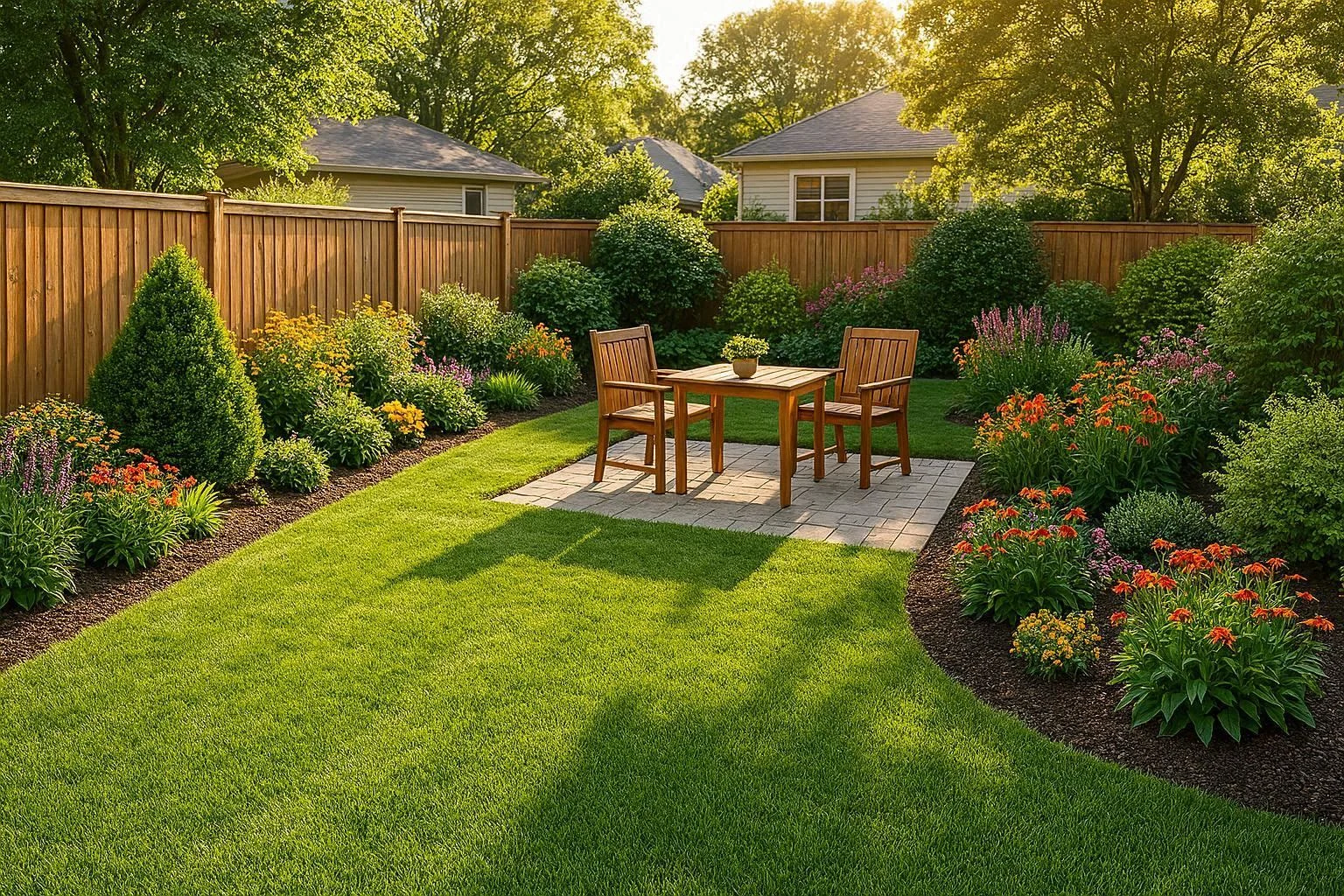
At InfoActivePropertyCare, we recommend dividing a backyard into zones: a utility zone (storage, trash, compost), an activity zone (lawn, play, patio), and a planting zone (beds, borders, containers). Even in small yards, this zoning approach prevents the “everything everywhere” chaos that makes spaces feel cluttered.
2. Soil and Lawn Preparation
This is the least glamorous part of backyard improvement and the most important.
Poor soil is the root cause (literally) of most backyard failures. Compacted clay won’t drain. Sandy soil won’t hold nutrients. Soil that hasn’t been amended in years won’t grow much of anything reliably.
Start with a soil test. Most county extension offices offer them for under $20. You’ll get a readout of your pH, nitrogen, phosphorus, and potassium levels, along with specific amendment recommendations. This takes the guesswork out of fertilizing.
For lawn preparation:
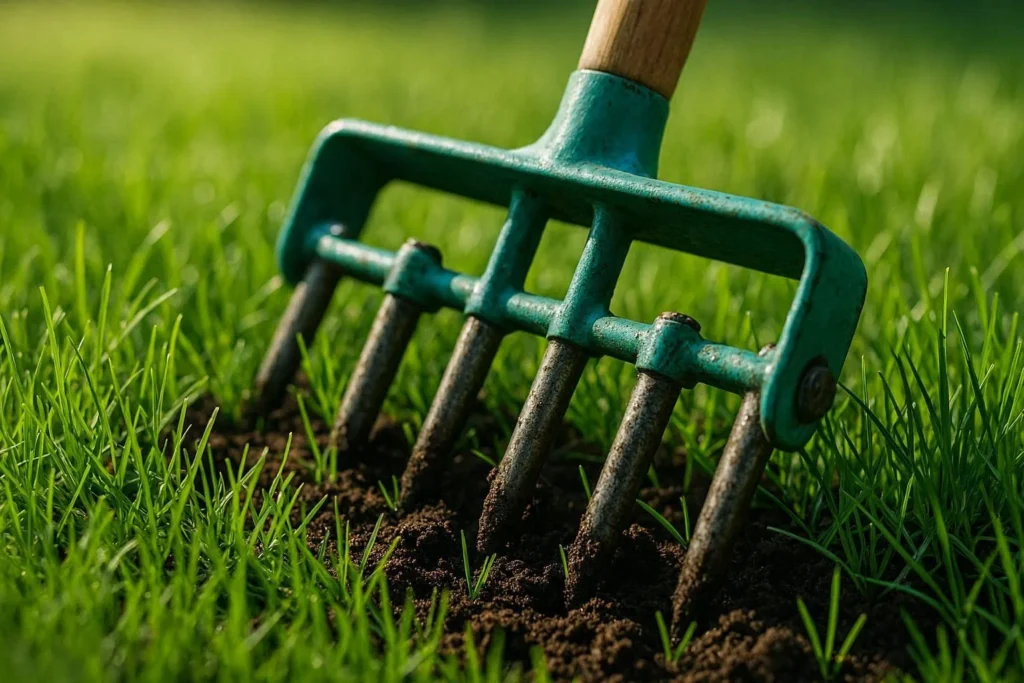
- Aerate in fall or early spring to relieve compaction
- Overseed thin areas rather than waiting for them to fill in naturally
- Top-dress with compost at 1/4 to 1/2 inch depth after aeration
- Set your mowing height correctly: most cool-season grasses thrive at 3-4 inches; cutting too short stresses the turf and invites weeds
In many backyard improvement projects we’ve handled, the lawn looks dramatically better within one season just from correcting mowing height and adding a single round of slow-release fertilizer. No reseeding, no chemicals, no drama.
3. Plant and Landscaping Choices
The most common landscaping mistake is planting for how things look at the nursery, not how they’ll look in five years. A 4-inch shrub can become a 6-foot wall. A “dwarf” ornamental tree can still shade out a third of your yard.
Principles for smart plant selection:
- Right plant, right place: match sun, soil, and moisture requirements exactly
- Native species first: they’re adapted to your climate, support local wildlife, and generally require less maintenance once established
- Vary texture and height: mix groundcovers, mid-height shrubs, and taller accent plants for visual depth
- Think in seasons: aim for something blooming or showing color in every season, not just spring
For low-maintenance beds, we often recommend a layered approach: a structural evergreen shrub (like boxwood or inkberry), a mid-height ornamental grass or perennial, and a low spreading groundcover to suppress weeds. That combination provides year-round interest with minimal upkeep. For more planting and yard layout strategies, see our AppcYard Garden Guide.
4. Outdoor Features: Patio, Lighting, and Seating
A backyard without a defined “room” rarely gets used. The goal of this layer is to create a space that feels intentional, somewhere you’d actually want to spend time.
Patio and hardscaping options (rough cost comparison):
| Option | Relative Cost | Durability | DIY-Friendly |
|---|---|---|---|
| Gravel/decomposed granite | Low | Moderate | Yes |
| Concrete pavers | Medium | High | Moderate |
| Poured concrete | Medium-High | Very High | No |
| Natural stone | High | Very High | No |
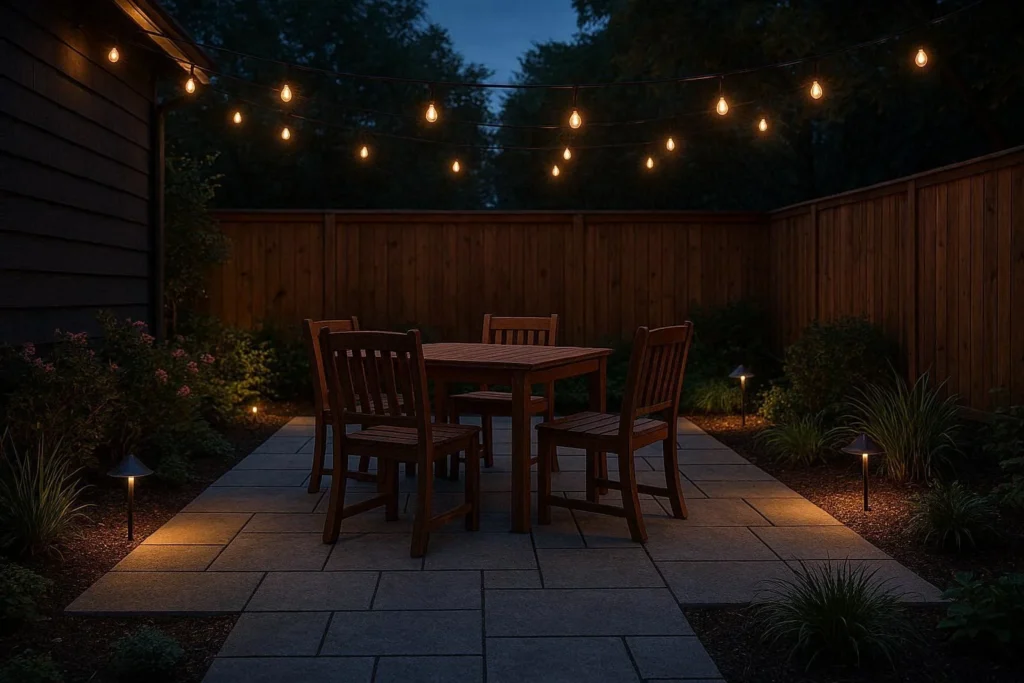
For most homeowners, concrete pavers hit the sweet spot of cost, durability, and DIY accessibility. They’re also easier to repair than poured concrete if settling occurs.
Lighting transforms how a space feels after dark. Solar path lights are fine for safety; for ambiance, low-voltage landscape lighting connected to a timer is worth the investment. Focus on uplighting trees or architectural features, and keep pathway lighting low and warm rather than bright and harsh.
Seating should be sized for how you actually entertain. A 6-person table on a patio that only fits 4 people comfortably will constantly feel cramped. Measure first, buy second.
5. Watering and Irrigation Basics
Overwatering kills more plants than drought. Underwatering stresses them into vulnerability. Getting irrigation right is less about frequency and more about method.
Key principles:
- Water deeply and infrequently. Deep watering encourages roots to grow down, making plants more drought-tolerant.
- Water in the morning, not the evening. Evening watering leaves foliage wet overnight, which promotes fungal disease.
- Drip irrigation is almost always better than overhead spray for planting beds. It delivers water directly to root zones with minimal waste.
- Lawn areas need roughly 1 inch of water per week (rain + irrigation combined).
A simple rain gauge is one of the most useful and underused tools in a backyard. It takes the guesswork out of supplemental irrigation.
6. Seasonal Backyard Care
Backyards don’t maintain themselves equally year-round. Here’s a simplified seasonal rhythm we recommend:
Spring: Aerate, overseed thin lawn areas, apply pre-emergent weed control, divide crowded perennials, mulch beds (2-3 inch depth).
Summer: Mow high, water deeply but infrequently, deadhead perennials to extend bloom time, monitor for pests.
Fall: Core aerating and overseeding, fertilize lawn with slow-release formula, plant spring bulbs, cut back perennials selectively (leave some seed heads for birds), clean and store outdoor furniture.
Winter: Inspect hardscaping for frost damage, plan next year’s changes, order seeds for spring.
Real-Life Backyard Improvement Scenarios
Scenario 1: The Suburban Lawn That Never Recovered A homeowner came to us after years of fighting a patchy, weed-heavy backyard. Soil test revealed heavy clay compaction and pH of 5.2 (too acidic for most turf). We recommended lime application to raise pH, core aeration, and overseeding with a turf-type tall fescue blend. Twelve months later, the lawn was 80% improved without a full resod.
Scenario 2: The Backyard Nobody Used A family had a large, sunny yard that sat completely unused. No defined space, just open lawn to a fence line. We added a 16×20 paver patio near the house, a simple pergola for shade, and three raised planting beds along the fence. Total investment around $8,000. They now host regularly and reported using the yard “almost every day” in summer.
Scenario 3: The Low-Budget Refresh Not every project needs a big investment. A rental property client needed visual improvement on minimal spend. We focused on fresh mulch in all beds, trimming overgrown shrubs to clean lines, seeding bare lawn patches, and adding three outdoor solar lanterns. Total spend: under $400. Listing photos looked dramatically better.
Common Backyard Mistakes to Avoid
From our property care experience, these are the errors we see most consistently and the ones that cost the most to fix after the fact:
- Planting too close to the house: roots and moisture can damage foundations; keep large shrubs at least 3 feet away
- Skipping mulch: beds without mulch lose moisture rapidly, grow weeds aggressively, and look unfinished
- Ignoring drainage: water that pools near the house or in low spots will eventually damage structures and kill plants
- Buying plants in flower: it’s tempting, but plants established in spring before bloom time root better and perform more reliably
- Over-complicating the design: a simple, well-executed plan beats an ambitious one that never gets finished
Step-by-Step Backyard Transformation Plan
Here’s the sequence we recommend for a complete backyard overhaul:
- Assess and photograph: document current state, note drainage issues, sun patterns, and existing plants worth keeping
- Soil test: wait for results before buying anything
- Fix drainage: swales, French drains, or regrading if needed
- Define zones: map out patio, lawn, and planting areas on paper
- Install hardscaping: patio, pathways, and edging before planting
- Amend soil and prepare beds: apply recommendations from soil test
- Plant trees and large shrubs: they establish slowly; plant first, fill in around them
- Lay sod or seed lawn: depending on time of year and budget
- Add perennials, groundcovers, and annuals: fill in the plant layer
- Install irrigation: before mulching, if applicable
- Mulch beds: 2-3 inches, kept away from plant stems
- Add lighting and outdoor features: the finishing layer
This sequence prevents the frustration of installing a patio after planting, or seeding a lawn only to tear it up for a drainage fix later. If you want a walkthrough of each step in more detail, our how-to guides library covers many of these topics individually.
Long-Term Maintenance Strategy
A backyard is never “done” and it evolves over time. The goal of a good design is to minimize the maintenance burden while keeping the space healthy.
Annual maintenance budget to plan for: For an average suburban backyard (5,000-8,000 sq ft), expect to spend $500-$1,500/year in materials (mulch, fertilizer, plants to replace, etc.) if doing the work yourself. Professional maintenance runs $1,500-$4,000+ annually depending on scope.
Time investment: A well-designed, well-planted backyard typically requires 2-4 hours of maintenance per month in the growing season, less in winter. A poorly designed space with no edging, no mulch, and no plan can easily consume that per week.
Our analysis of outdoor property trends shows that homeowners who establish a seasonal maintenance rhythm in the first year consistently maintain better outdoor spaces over the long term than those who do large periodic overhauls. Small, regular effort beats sporadic heroics.
Frequently Asked Questions
AppcGarden is a layered backyard improvement framework developed through InfoActivePropertyCare’s property management and landscaping experience. It prioritizes soil health, functional layout, and sustainable planting choices before aesthetic finishing touches, resulting in outdoor spaces that look good and hold up over time.
The highest-impact, lowest-cost improvements are usually: fresh mulch in all planting beds, edging to define lawn and bed boundaries, seeding bare lawn patches, and pruning existing overgrown plants into clean shapes. These four steps alone can dramatically improve the appearance of almost any backyard for under $300-$500 in materials.
Mow at the correct height for your turf type, water deeply and infrequently, mulch beds annually, and address weeds before they set seed. These habits prevent most common backyard problems before they require costly intervention.
During the growing season, plan for at least 2-4 hours of maintenance per month: mowing, weeding, watering, and minor pruning. A few targeted sessions in spring and fall (aeration, fertilizing, mulching) handle the heavier seasonal work.
Yes, meaningfully so. A well-landscaped, functional outdoor space can add 5-15% to a home’s perceived value, improve listing photos, and reduce time on market. The return is strongest when improvements are appropriate to the neighborhood. An over-landscaped yard in a modest neighborhood won’t return the same as one in a premium area.
Conclusion: Your Backyard, Done Right
The gap between a neglected backyard and a genuinely functional, attractive outdoor space is almost never as large as it seems from the outside. In most cases, it comes down to working in the right order, making informed choices, and maintaining what you build.
The AppcGarden backyard guide by ActivePropertyCare is designed to give you that roadmap, whether you’re starting from scratch or trying to recover a space that’s gotten away from you. The framework works because it’s based on how backyards actually function, not just how they look in magazine spreads.
Fix the foundation. Define the space. Plant with purpose. Maintain consistently. That’s the whole system.
Explore more expert guides on InfoActivePropertyCare for seasonal care calendars, plant selection databases, and property improvement strategies tailored to your region.