

Moving is one of life’s most significant transitions. Whether you are shifting across town or relocating to a new city entirely, the process can feel overwhelming faster than most people expect. Boxes pile up before you have a system for labeling them. Schedules slip. Fragile items get packed alongside heavy ones. And suddenly what seemed manageable has become a logistical nightmare.
The good news is that most moving stress is preventable. With the right preparation, a clear timeline, and a few professional strategies, relocating your home or office does not have to be chaotic. At InfoActivePropertyCare, we believe that a well-planned move is an extension of good property management, and that treating your relocation with the same care you give your home makes all the difference.
This guide covers everything from building your moving timeline to handling specialty items, planning an office relocation, and understanding how pricing transparency protects you from last-minute surprises.
Why Proper Moving Planning Matters
Many people underestimate how much coordination a move actually requires. From a property transition perspective, moving involves far more than packing and loading. It requires coordinating utilities, managing timelines, preparing your current property for handover, and ensuring your new space is ready to receive everything you own.
In many relocation projects we have observed, the most common cause of moving day chaos is not a lack of effort. It is a lack of a structured plan. People start packing too late, underestimate the volume of their belongings, and forget to account for the time needed to disassemble furniture, disconnect appliances, or manage access for movers.
A solid plan, started four to six weeks before your move date, gives you the control you need to execute each phase calmly and without last-minute scrambling.
Common Challenges During Local and Long-Distance Moves
Understanding where moves tend to go wrong helps you avoid those exact pitfalls.
For local moves, the biggest traps are:
- Assuming it will take less time than it does because the distance is short
- Making multiple trips without a coordinated loading strategy, which wastes hours
- Forgetting to account for elevator access, parking restrictions, or building move-in windows at the destination
For long-distance moves, the stakes are higher because mistakes are harder to fix:
- Inventory management becomes critical, as every item needs to be tracked and documented
- Packing standards are more demanding because items will be in transit longer and subjected to more movement
- Timing coordination between departure and arrival must account for delays in travel, delivery windows, and access to the new property
Both types of moves benefit from the same foundation: a written plan, a prioritized packing schedule, and professional support for the heavy lifting.
Essential Steps for a Stress-Free Relocation
Here is a practical, phase-by-phase approach to organizing your move.
Six to Eight Weeks Before Moving
- Declutter aggressively. Donate, sell, or discard anything you have not used in the past year. Moving fewer items saves time and money.
- Research and book professional movers. Reputable companies fill their schedules quickly, especially in peak seasons (late spring through summer).
- Notify your landlord or begin property handover preparation if you are vacating a rental.
- Start collecting specialty packing materials: wardrobe boxes, dish packs, and padded wrapping for electronics.
Three to Four Weeks Before
- Begin packing non-essentials: off-season clothing, books, decorative items, and items from rarely used rooms.
- Label every box with both its contents and its destination room. This single habit saves enormous time during unpacking.
- Confirm utility transfers and address changes with banks, subscriptions, and government agencies.
- Photograph the condition of your current property for your own records.
One Week Before
- Pack everything except daily essentials.
- Prepare a moving day kit: important documents, phone chargers, medications, a change of clothes, and basic cleaning supplies.
- Confirm your moving day logistics: arrival time, parking access, elevator reservations, and contact information for your movers.
Moving Day
- Do a full walkthrough before movers arrive to identify any last-minute items.
- Be present and available to direct the crew, as they will have questions about priority items and room placements.
- Do a final walkthrough of the old property before handing over keys.
Professional Tips for Packing and Organizing
Packing is where most DIY moves lose efficiency. These strategies make a real difference.
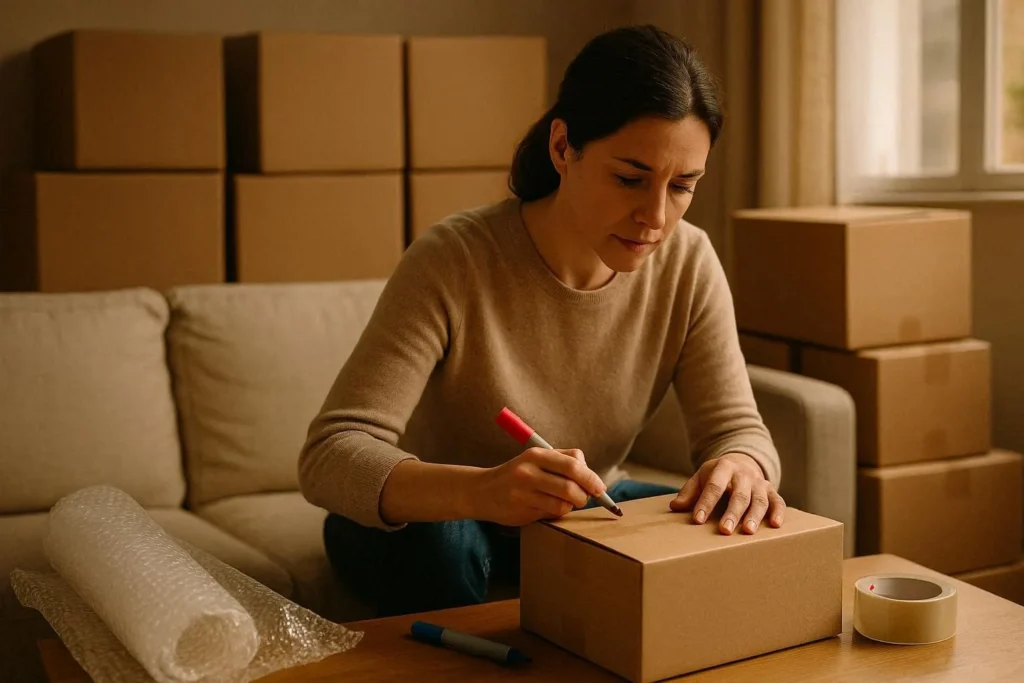
Pack by category, not by room. Items from the same room often belong in different priority groups. Books, for example, can be packed weeks early regardless of where they live in the house.
Use uniform box sizes where possible. Consistent sizing makes stacking safer in the moving truck and reduces the risk of crushed boxes. Reserve large boxes for lightweight items like linens and pillows. Heavy items like books and tools belong in small boxes.
Create a color-coded labeling system. Assign each room a color and use matching tape or stickers on every box. This allows movers to place boxes in the correct rooms instantly, saving you hours of redirecting.
Keep an inventory list. A simple spreadsheet noting box numbers and contents gives you a reference if anything goes missing or needs to be located quickly during unpacking.
For tips on organizing your home before or after a move, our home organization and household building guide covers layout strategies and space planning in detail.
Handling Fragile and Specialty Items Safely
This is where professional expertise genuinely earns its value.
Fragile Items
Standard fragile items such as glassware, ceramics, and framed artwork need individual wrapping with packing paper or bubble wrap, nested in boxes with padding on all six sides. The goal is zero movement inside the box. If an item shifts when you shake the box, it needs more padding.
Dishes should be packed vertically (on their edges), not stacked flat. This dramatically reduces breakage because pressure distributes more evenly.
Artwork and mirrors require mirror boxes and corner protectors. Never wrap fine art in newspaper, as ink can transfer.
Specialty Items
Pianos are among the most challenging items to move safely. Their weight is unevenly distributed, they are sensitive to humidity and temperature changes, and even small drops can damage internal mechanisms. Always use specialty movers with piano experience, padded dollies, and proper strapping systems. If you are working with experienced Miami Movers, confirm that their team has specific piano and specialty item protocols before booking.
Antiques and high-value items should be documented with photographs and appraised values before moving. Consider whether your standard homeowner’s insurance covers items in transit, or whether you need a separate rider.
Large electronics benefit from their original packaging when available. If that is not an option, use anti-static wrap and clearly mark boxes as electronics requiring gentle handling.
Office Relocation Planning Strategies
Moving a business is a different challenge from moving a home. Downtime costs money, and disruption to workflows affects more than just one person. From a property transition perspective, office relocations require a structured project management approach.

Build a dedicated relocation team. Assign a point person from each department to coordinate their team’s packing, data backup, and equipment documentation.
Audit your equipment and furniture before moving. A relocation is the ideal time to retire outdated equipment, update ergonomic furniture, and reconfigure your workspace layout to suit your new space better.
Create a phased move plan. If possible, stagger the relocation so that some operations continue while others are moved. This reduces the window of complete downtime.
Communicate clearly with clients and vendors. Update your address across all platforms well in advance and send a direct notification to key contacts. An unexpected address change can damage business relationships.
Back up all data before anything moves. This is non-negotiable. Hardware can be replaced; data often cannot.
For property preparation before a move, including garden and outdoor space management at either location, our yard and garden relocation guide provides helpful pre-move and post-move strategies.
How Transparent Pricing Improves Customer Trust
One of the most common moving complaints is hidden costs. A quote that seems reasonable becomes significantly larger by the time additional fees for stairs, long carries, fuel surcharges, or specialty items are added.
Transparent pricing, meaning an itemized estimate that clearly explains what is and is not included, is a sign of a trustworthy moving company. Here is what to look for:
- Binding versus non-binding estimates. A binding estimate guarantees your final price regardless of weight or time. A non-binding estimate can change. Understand which one you are receiving.
- Written confirmation of all included services. Get specifics on whether disassembly, reassembly, floor protection, and specialty item handling are included.
- A clear policy on additional charges. Ask directly about what circumstances would cause your price to increase. A reputable mover will answer this question clearly.
Our relocation planning research shows that customers who request itemized written estimates are significantly less likely to report billing disputes after their move.
Mistakes to Avoid During a Move
Even experienced movers make these errors. Keeping them in mind helps.
- Packing hazardous materials. Most moving companies cannot legally transport flammable items, propane tanks, or certain chemicals. Plan to dispose of these separately.
- Not confirming moving day logistics in advance. A crew that shows up to find no parking access or a locked loading dock loses hours of your day.
- Underestimating the time to unpack. Many people budget carefully for move-out day and then live out of boxes for weeks. Build unpacking time into your schedule the way you would any other project.
- Skipping property documentation. Failing to photograph your old property before vacating leaves you exposed to unfair damage claims. Failing to document your new property before moving in leaves you responsible for pre-existing damage.
- Leaving sentimental or irreplaceable items to chance. Items like family photos, important documents, and heirlooms should travel with you personally, not in the moving truck.
Long-Term Benefits of Organized Relocation Planning
A well-executed move does more than reduce stress on moving day. It sets the tone for how you inhabit your new space.
When items arrive labeled and organized, unpacking becomes a logical process rather than a chaotic one. When furniture is placed intentionally from the start, rooms function better from day one. When a business relocates smoothly, team morale stays higher and client relationships remain intact.
From a property care perspective, a move that protects your belongings and your new property from damage also protects the investment you have made in both spaces. Scratched floors, damaged walls, and broken items are not just expensive to fix. They are entirely preventable with the right preparation.
For long-term guidance on estate and property transitions, including what to consider when managing property handovers, our estate property tips resource covers the full picture of responsible property management through life transitions.
Conclusion
A move is a significant undertaking, but it does not have to be a stressful one. The difference between a chaotic relocation and a smooth transition almost always comes down to preparation, professional support, and a willingness to treat moving as a project that deserves a real plan.
Whether you are moving a household across the city, relocating a business to a new office, or managing the careful transport of specialty items, the principles remain the same: start early, document everything, pack thoughtfully, and ask the right questions of the professionals you hire.
At InfoActivePropertyCare, we believe that how you move reflects how you care for your property. A well-managed transition protects your belongings, your new space, and your peace of mind.
Explore more property care and relocation guides on our how-to resource hub for practical, expert-backed advice on every stage of your property journey.