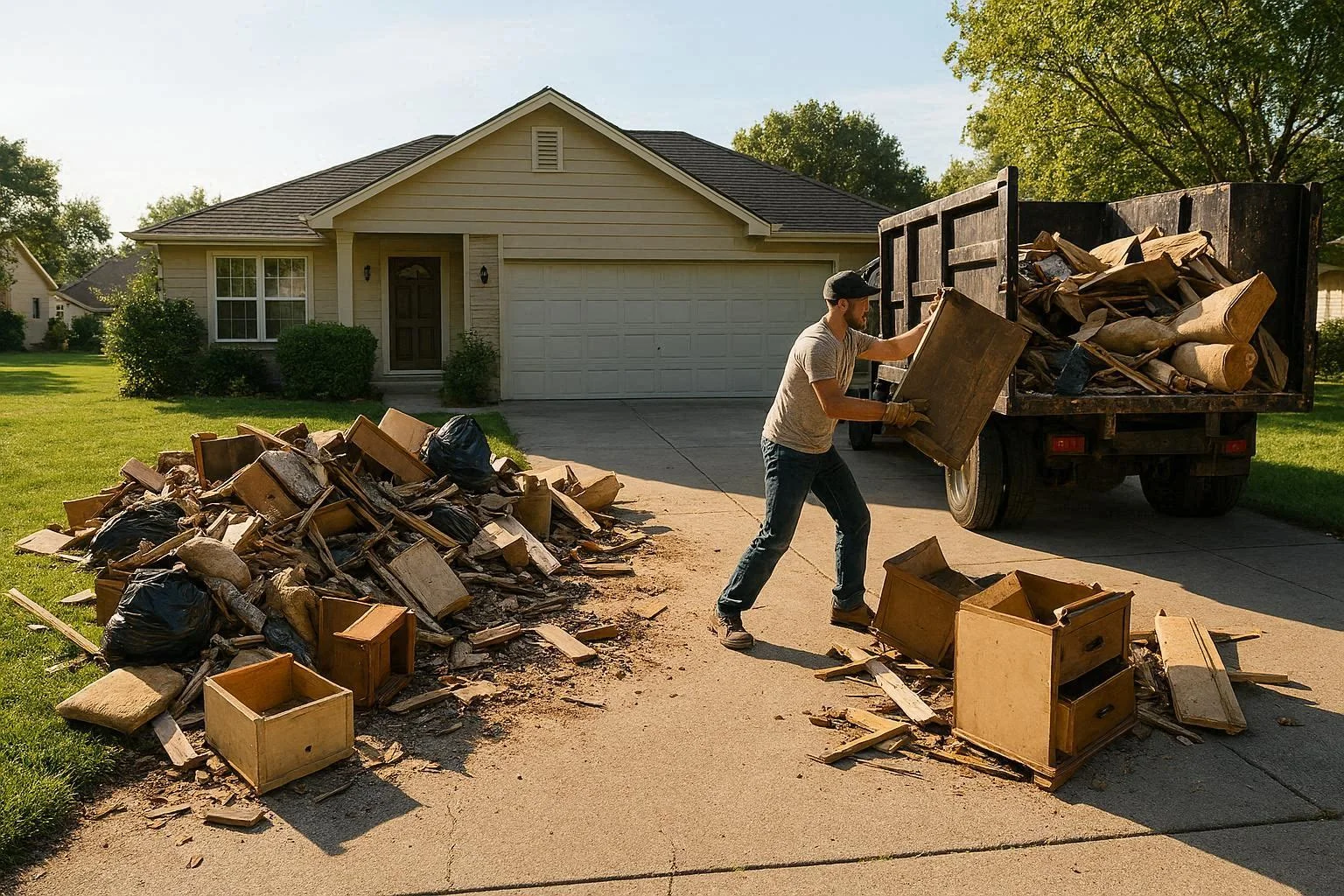
Picture this: you’ve finally decided to renovate your backyard, add a deck, or repave the driveway. The contractor shows up, takes one look at the piled-up debris, old appliances, broken lumber, and overgrown corners, and tells you the job can’t start until the site is cleared. Suddenly, a two-week project turns into a month-long ordeal, and your budget absorbs costs you never anticipated.
This scenario plays out constantly across residential neighborhoods. Homeowners focus so much energy on planning improvements that they overlook the foundational step that makes every project smoother, safer, and more cost-effective: thorough property cleanup and junk removal.
Whether you’re dealing with years of accumulated garage overflow, a yard full of renovation debris, or an outdoor space that’s quietly become a storage lot, clearing the clutter isn’t just about aesthetics. It directly affects property value, project timelines, and long-term maintenance costs. Across the industry, services like Ponderosa Hauling and Junk Removal represent a growing market demand from homeowners who’ve realized that cleanup isn’t optional it’s foundational.
Why Property Cleanup Is Often Overlooked
Most homeowners don’t set out to let clutter accumulate. It happens gradually. A broken lawnmower sits in the corner of the garage “until someone has time to deal with it.” Old fencing from a renovation gets stacked against the house for temporary storage that becomes permanent. Bags of concrete, leftover tiles, and broken pots pile up in the side yard.
The problem is that cleanup doesn’t feel productive in the way that painting a room or installing new fixtures does. There’s no visible upgrade at the end just the absence of a problem. That psychological barrier is part of why cleanup work gets perpetually delayed.
At InfoActivePropertyCare, we’ve found that this delay is one of the most expensive decisions homeowners make. Not because junk removal itself is costly, but because the downstream consequences structural damage from debris, pest infestations in cluttered spaces, wasted time during renovation projects compound over time.
How Clutter Impacts Home Appearance and Functionality
The effects of property clutter go well beyond appearance, though curb appeal alone carries significant financial weight. Studies consistently show that exterior condition is one of the top factors buyers evaluate, often forming an impression within seconds of seeing a home.
From a home maintenance perspective, clutter creates more systemic problems:
- Moisture and rot: Debris stacked against exterior walls or foundations traps moisture, accelerating wood rot and creating conditions for mold growth.
- Pest harborage: Piles of lumber, cardboard, and organic waste are prime nesting grounds for rodents, termites, and other pests.
- Drainage obstruction: Old materials blocking drainage paths can redirect water toward foundations, causing costly structural issues.
- Safety hazards: Cluttered walkways, driveways, and work areas create fall and trip risks, especially for older residents or children.
- Reduced usable space: A garage, basement, or backyard that’s functioning as a junk repository isn’t serving its intended purpose and that represents real, measurable lost value.
The relationship between visible clutter and perceived property quality is direct. A neglected yard signals deferred maintenance to anyone who sees it, including appraisers, neighbors, and potential buyers.
Signs Your Property Needs Professional Cleanup Support
Not every cleanup job requires professional help, but certain situations clearly call for it. In many property cleanup projects we’ve observed, homeowners underestimate the scope of work until they’re knee-deep in a job that requires equipment, labor, and proper disposal knowledge they don’t have.
Consider professional cleanup support when:
- You have heavy items such as appliances, furniture, concrete, or roofing materials that require equipment to move safely
- The volume of waste exceeds what standard trash collection handles
- You’re dealing with renovation debris from a recent remodel or demolition
- The property has been vacant for an extended period and has accumulated significant junk
- You’re preparing to sell or refinance and need fast, thorough results
- Hazardous materials such as old paint cans, chemicals, or asbestos-containing materials are present (these require specialized handling)
The key marker is when the project exceeds a single weekend of manageable effort. Attempting to force through an oversized cleanup without the right resources often results in partially completed work, items moved rather than removed, and burnout before the actual improvement project begins.
Benefits of Site Preparation Before Renovations
Renovation planning guides almost universally understate the importance of site preparation. Contractors value it enormously a clear, accessible work area directly affects how efficiently they can work, which in turn affects your costs.
What proper site preparation accomplishes:
- Reduces contractor time spent navigating or moving obstacles
- Prevents damage to new materials from contact with debris
- Allows accurate assessment of the actual work surface (you can’t evaluate a floor you can’t see)
- Reduces the risk of project delays caused by unplanned cleanup mid-renovation
- Establishes a safer working environment for everyone on site
A demolition preparation checklist for any interior or exterior renovation project should include:
- Remove all personal items, furniture, and movable objects from the work zone
- Clear pathways for material delivery and waste removal
- Identify and properly dispose of hazardous materials before any structural work begins
- Separate salvageable materials (reusable lumber, fixtures, hardware) from actual waste
- Arrange for debris removal bins or scheduled hauling before the project start date
This last point is frequently overlooked. Waiting until waste accumulates before arranging removal creates unnecessary project pauses.
Light Demolition and Safe Material Removal Considerations
Light demolition removing non-structural walls, old sheds, deteriorated fencing, concrete pads, or deck structures is often the gateway to meaningful property improvement. It’s also where homeowners most commonly make costly mistakes.
What homeowners need to know about light demolition:
- Always check for utilities: Before any ground-breaking or wall removal, verify that no gas, water, or electrical lines run through the area. Contact your local utility locating service.
- Understand what’s structural: Even in “light” demo work, removing the wrong wall element can compromise structural integrity. When in doubt, consult a professional.
- Plan material removal logistics upfront: Concrete, drywall, roofing materials, and treated lumber are heavy and have specific disposal requirements. A standard dumpster rental may not accommodate all materials.
- Protect surrounding areas: Demolition generates dust, debris, and vibration. Cover adjacent surfaces, protect landscaping, and use appropriate safety gear.
- Permit requirements vary by location: Some municipalities require permits even for minor demolition work. Check with your local building department before starting.
Our property maintenance observations suggest that the demolition phase is where renovation budgets most commonly absorb unplanned costs. Proper planning including waste management logistics prevents the majority of those overruns.
Outdoor Space Cleanup and Curb Appeal Improvements
The outdoor spaces of a property are its first and last impression. Yet in terms of maintenance attention, they’re often the last priority. Yard cleanup and site clearing projects that homeowners consider cosmetic can have outsized effects on perceived value and actual functionality.
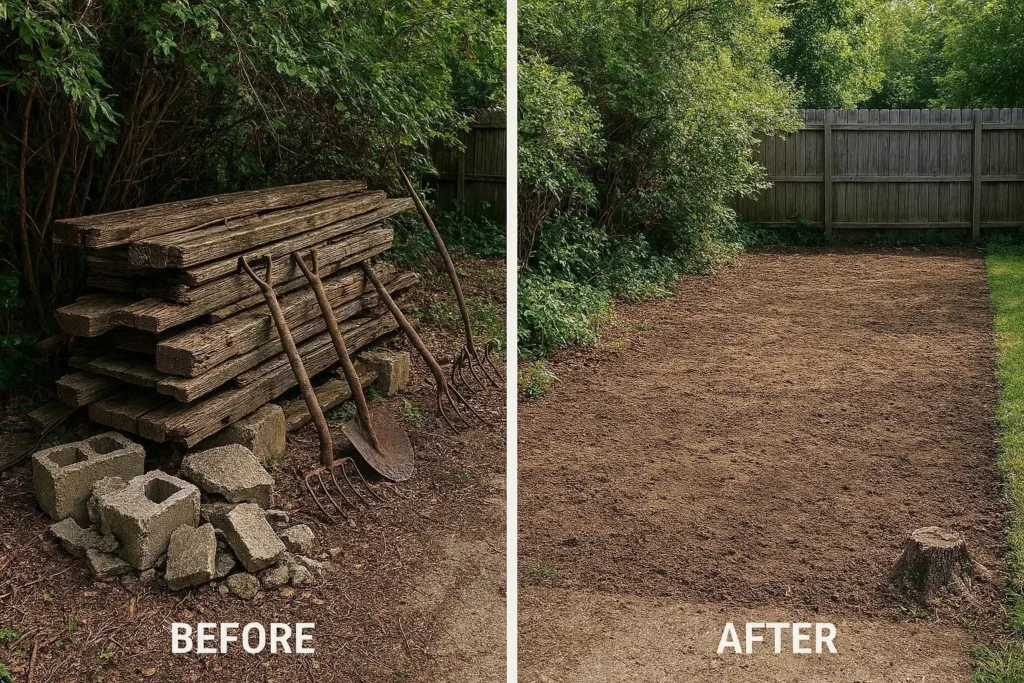
A structured outdoor cleanup sequence:
- Start with large debris removal: Clear broken furniture, unused equipment, old planters, and bulk waste first.
- Address overgrowth: Trim overgrown shrubs, remove dead trees and stumps, and cut back vegetation encroaching on structures.
- Clean hardscape surfaces: Power wash driveways, walkways, patios, and retaining walls.
- Repair or remove deteriorated structures: Old fencing, crumbling retaining walls, and damaged deck sections should be repaired or removed partial structures in disrepair signal neglect more than no structure at all.
- Establish a maintenance boundary: Define what areas are landscaped versus natural, and ensure the boundary is clean and clearly intentional.
- Final detail pass: Edge beds, define walkways, and address surface drainage issues.
For inspiration on transforming your outdoor areas into functional, attractive spaces, the Yard & Garden Guide by ActivePropertyCare covers practical approaches to outdoor organization and landscape improvement.
Common Cleanup Mistakes Homeowners Make
Experience watching homeowners navigate cleanup projects reveals a set of recurring errors. Avoiding these saves time, money, and considerable frustration.
Mistake 1: Moving junk rather than removing it Relocating items from one part of the property to another creates the illusion of progress without solving the problem. Committed removal is the only effective approach.
Mistake 2: Underestimating volume and weight What looks like “a truckload” to an untrained eye is often two or three loads. Renting a bin that’s too small or underestimating hauling requirements extends the project unnecessarily.
Mistake 3: Mixing hazardous and non-hazardous waste Old electronics, paint cans, batteries, and treated lumber require separate handling. Mixing them with standard debris creates disposal complications and potential legal liability.
Mistake 4: Skipping protective measures Demo and cleanup work generates dust, sharp debris, and airborne particles. Eye protection, heavy gloves, and appropriate footwear are non-negotiable.
Mistake 5: Neglecting to photograph before cleanup Documenting the before-state of a property protects homeowners from disputes about pre-existing conditions and provides a baseline for assessing improvement.
Mistake 6: Not separating salvageable materials Usable lumber, working fixtures, and quality hardware have resale or reuse value. Throwing everything into a bin together wastes recoverable value.
Real-Life Property Improvement Examples
Consider a typical suburban property undergoing a backyard renovation. The homeowners had planned to install a pergola and extended patio, but the yard contained a deteriorated storage shed, multiple broken concrete stepping stones, an old fire pit, and roughly a decade of accumulated garden debris.
Before a single contractor could begin layout work, the site required a full clearing: shed demolition and removal, concrete breaking and hauling, debris collection, and surface grading. The cleanup phase took a full weekend with professional help and a dedicated hauling service. Without it, the renovation couldn’t begin.
The result of the completed project which included the pergola, new pavers, and perimeter garden beds added measurable value to the home’s appraisal. But equally important, the thorough cleanup before construction made the contractor’s work faster and cleaner, keeping the total project under budget.
Another common scenario involves estate properties or homes after extended tenancy. These properties often require comprehensive indoor and outdoor cleanouts before any improvement work can be assessed or begun. The cleanup itself is the first improvement and in many cases, it’s the most impactful one.
For a deeper look at how home building and major improvement projects come together, the Household Home Building Guide by ActivePropertyCare walks through planning frameworks that connect site preparation with long-term results.
Long-Term Benefits of Maintaining Clean Spaces
The value of cleanup isn’t realized only at the point of a renovation or sale. Properties that are maintained in clean, organized condition accrue benefits continuously.
Ongoing benefits of clean, maintained properties:
- Lower maintenance costs: Issues like pest infestation, water damage, and structural wear are caught earlier when spaces are accessible and regularly assessed.
- Better contractor relationships: Trades people price jobs partly based on site conditions. A clean, accessible property consistently receives more competitive bids.
- Reduced stress and improved livability: The psychological weight of living among clutter is well-documented. Organized spaces genuinely improve day-to-day quality of life.
- Improved emergency preparedness: Clear egress paths, accessible utility shutoffs, and organized storage make homes significantly safer in emergencies.
- Stronger appraisal outcomes: Appraisers factor in condition throughout a property. Maintained exteriors and accessible interiors support stronger valuations.
A consistent property maintenance planning approach not just reactive cleanup, but proactive seasonal organization is one of the highest-return habits a homeowner can develop. Explore practical strategies for building that habit in the Estate & Property Tips from ActivePropertyCare.
Cleanup Before Improvement: A Practical Checklist
| Phase | Task | Priority |
|---|---|---|
| Pre-project | Remove all bulk waste and debris from work zone | High |
| Pre-project | Identify and separate hazardous materials | High |
| Pre-project | Clear access paths for contractors and equipment | High |
| Pre-project | Arrange waste removal logistics (bin, hauler) | High |
| Outdoor spaces | Remove deteriorated structures and dead vegetation | Medium–High |
| Outdoor spaces | Clean hardscape surfaces | Medium |
| Indoor spaces | Clear rooms scheduled for renovation work | High |
| Indoor spaces | Document condition with photographs | Medium |
| Post-cleanup | Establish maintenance schedule | Medium |
Conclusion
Property cleanup is not a preliminary inconvenience on the way to real improvement work. It is improvement work foundational, value-generating, and maintenance-enabling. The homeowners and property managers who treat cleanup and decluttering as core disciplines consistently see better renovation outcomes, lower maintenance costs, and stronger long-term property performance.
Whether you’re preparing for a major renovation, recovering from a period of neglect, or simply maintaining a well-organized property year-round, the principles are the same: remove what doesn’t belong, prepare the site properly, and treat the work as the investment it genuinely is.
Explore more property care and home improvement insights on InfoActivePropertyCare from site preparation and outdoor organization to full home building guides built around real experience.
InfoActivePropertyCare provides property care insights, home improvement guidance, and practical maintenance resources for homeowners and property managers. All content is based on observed industry practice and property maintenance experience.