It usually starts the same way. A homeowner walks outside the morning after a heavy storm, looks up at the roofline, and notices a shingle sitting in the yard that definitely wasn’t there before. Or maybe it’s less dramatic: a slow, unexplained water stain creeping across a bedroom ceiling, or gutters that overflow every time it rains hard enough to matter. By the time these problems become visible, the damage underneath has often been building for months.
A home’s exterior, the roof, gutters, and siding working together, is the first and most important line of defense against wind, rain, sun, and temperature swings. When these systems are maintained properly, they quietly protect everything inside the house: the framing, insulation, electrical systems, and the family living there. When they’re neglected, small issues turn into expensive repairs fast.
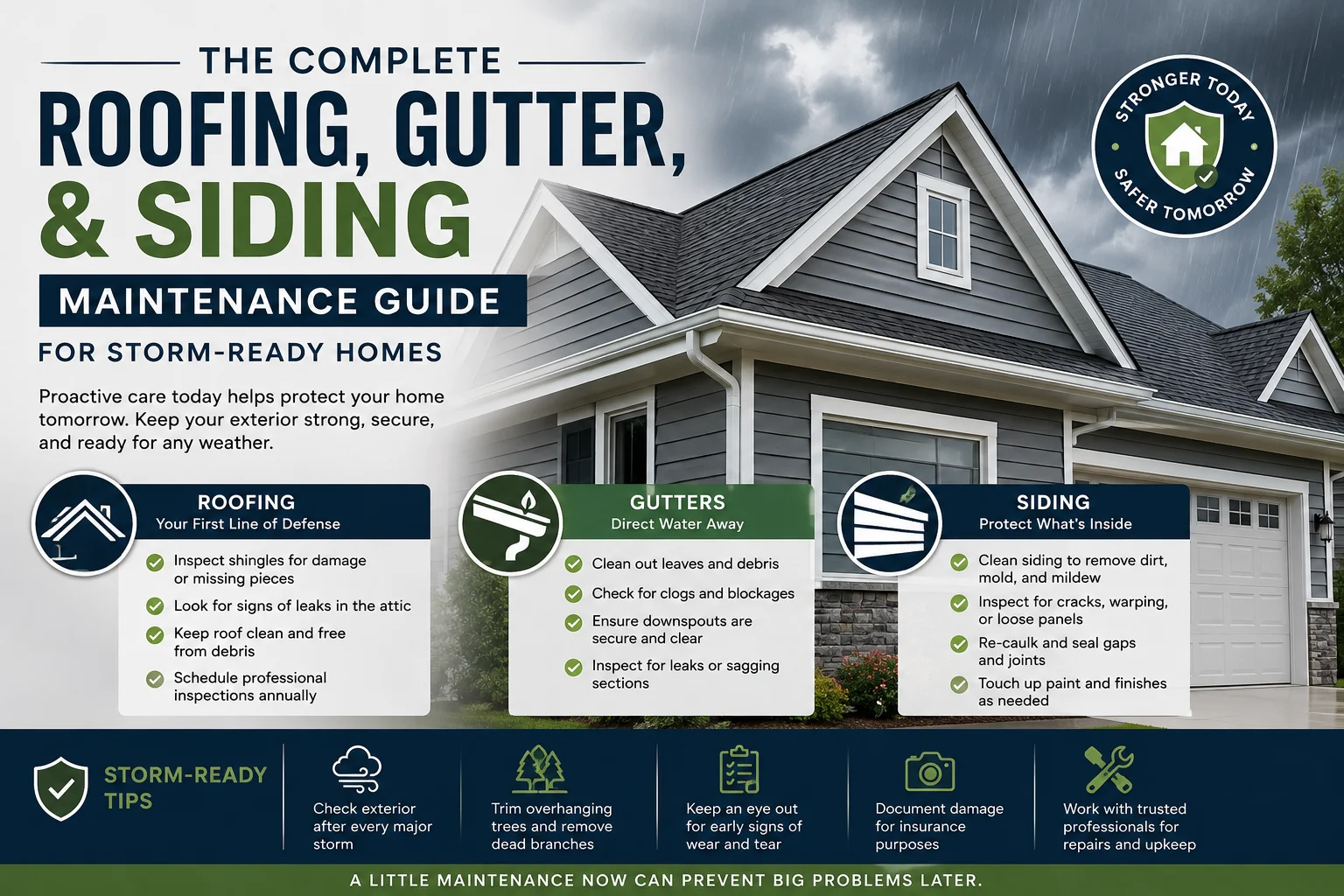
This guide walks through what actually matters when it comes to roof maintenance, gutter care, siding upkeep, and storm preparation. Reputable roofing companies, including well-regarded regional contractors like Cane Bay Roofing, consistently emphasize the same principle: consistent inspection and small, timely repairs prevent the vast majority of major structural failures. That philosophy applies whether a home is brand new or several decades old.
Why Exterior Home Maintenance Matters
It’s easy to think of roof and siding maintenance as optional until something goes wrong. In practice, the exterior envelope of a home does several jobs at once, and all of them affect the property’s long-term value.
Structural protection. The roof deck, siding, and flashing work together to keep water out of the framing. Once moisture gets past these barriers, it can cause rot, mold, and even foundation issues over time.
Weather resistance. Wind-driven rain, hail, and UV exposure all wear down exterior materials differently. A home built to handle a mild climate needs different attention than one in a storm-prone region.
Energy efficiency. Gaps in siding, poor attic ventilation, and damaged roofing all let conditioned air escape, which drives up utility bills year-round.
Long-term property preservation. Homes with documented, consistent maintenance histories tend to hold their value better and sell faster, since buyers and inspectors can see there haven’t been years of deferred repairs.
Reduced repair costs. A missing shingle costs very little to replace. Left alone through two or three storm seasons, that same missing shingle can lead to a full roof deck replacement.
From our property care experience, the homes that end up with the most expensive repair bills are almost never the ones with catastrophic, sudden damage. They’re the ones where small warning signs were ignored for years.
Roof Maintenance Best Practices
The roof takes more abuse than any other part of the house, so it deserves the most consistent attention.
Routine inspections. A visual inspection twice a year, ideally in spring and fall, catches most problems early. Homeowners don’t need to climb onto the roof themselves; binoculars from the ground or a quick walk around the property is often enough to spot obvious trouble.
Missing or damaged shingles. Curling, cracking, or missing shingles expose the underlayment and roof decking to water. Even a few damaged shingles can allow moisture intrusion during heavy rain.
Flashing. The metal flashing around chimneys, vents, and roof valleys is one of the most common failure points on any roof. Flashing that has pulled away or rusted through is a leading cause of hidden leaks.
Roof ventilation. Proper attic ventilation regulates temperature and moisture. Poor ventilation can trap heat and humidity, shortening the lifespan of shingles and encouraging mold growth in the attic.
Moss and algae prevention. In humid or shaded areas, moss and algae growth can trap moisture against the roof surface, gradually breaking down shingle granules.
Attic moisture control. Checking the attic for damp insulation, discoloration, or a musty smell is one of the simplest ways to catch a roof leak before it shows up on the ceiling below.
Expert Tip: Keep a simple written or photo log of each roof inspection. Comparing photos year over year makes it much easier to spot gradual wear, like shingle granule loss, that’s easy to miss in a single visit.
Homeowners who want a more detailed walkthrough of these steps can reference this roof maintenance guide for a fuller checklist of what to look for during each seasonal inspection.
The Importance of Gutter Maintenance
Gutters don’t get much attention until they fail, but they play an outsized role in protecting the rest of the home.
Properly functioning gutters direct rainwater away from the foundation, which helps prevent basement moisture, soil erosion, and cracking in the foundation walls. They also protect siding from constant water exposure and reduce the risk of water backing up under the roofline, which can lead to rot in the fascia and soffits.
Homeowner Gutter Maintenance Checklist:
- Clean gutters at least twice a year, more often if there are overhanging trees
- Check for sagging sections or loose brackets
- Confirm downspouts extend at least 3 to 4 feet away from the foundation
- Look for water stains or streaking on siding below the gutter line
- Inspect for rust spots or small holes, especially on metal gutters
- Verify gutters are properly pitched so water doesn’t pool
Clogged gutters are one of the most preventable causes of exterior water damage, yet they’re also one of the most commonly ignored maintenance tasks. A gutter cleaning that takes an afternoon can prevent thousands of dollars in foundation and siding repairs.
Since water management doesn’t stop at the downspout, it’s also worth reviewing these backyard drainage improvement tips to make sure runoff is properly directed once it leaves the gutter system.
Siding Maintenance Tips
Siding takes on a dual role: it’s both a visual finish and a functional moisture barrier. Different materials require different care.
Vinyl siding is low maintenance but can crack in extreme cold or warp near heat sources. Regular washing with mild soap and water prevents mildew buildup in seams.
Fiber cement siding holds paint well and resists rot, but caulked joints should be checked periodically, since failed caulking is a common entry point for moisture.
Wood siding offers a classic look but needs the most attention, including regular repainting or staining and prompt repair of any cracked or warped boards to prevent moisture intrusion.
| Siding Material | Typical Lifespan | Maintenance Level | Common Issues |
|---|---|---|---|
| Vinyl | 20-40 years | Low | Cracking in cold, fading over time |
| Fiber Cement | 30-50 years | Moderate | Caulk failure, moisture at joints |
| Wood | 20-30 years | High | Rot, warping, insect damage |
| Aluminum | 30-40 years | Low to Moderate | Denting, oxidation |
Homeowners often discover siding problems only after moisture has already worked its way into the wall cavity, which is why periodic inspection matters as much as cleaning. Checking for soft spots, bubbling paint, or discoloration near seams can catch problems while they’re still inexpensive to fix.
Preparing Your Home for Storm Season
Storm preparation is really just accelerated maintenance, focused on the areas most likely to fail under sudden stress.
- Schedule a full roof inspection before the season’s first major storm
- Trim overhanging tree branches that could break and strike the roof or siding
- Secure or repair loose gutters and downspouts
- Recheck flashing around chimneys, skylights, and vents
- Seal any visible gaps around windows, doors, and siding joints
- Put together a basic emergency kit and know where to shut off utilities if needed
Following industry best practices, most roofing professionals recommend this kind of seasonal prep at least once a year in storm-prone regions, and twice a year in areas that see both hurricane and winter storm risk.
Common Signs of Storm Damage
After a significant storm, a careful walk-around can reveal damage before it worsens.
- Lifted or missing shingles, which expose the roof deck to further water intrusion
- Hail damage, often visible as small dents or bruising on shingles, gutters, and siding
- Water stains on ceilings or attic surfaces, indicating an active or recent leak
- Dented or misaligned gutters, which can affect drainage even if they still look intact
- Cracked or dented siding, particularly on the side of the house that faced the storm directly
- Loose or missing flashing, especially around roof penetrations
If damage is extensive, or if there’s any uncertainty about the roof’s structural integrity, this is the point to bring in a licensed roofing professional rather than attempting repairs personally. Roof work carries real safety risk, and a trained inspector can identify hidden damage that isn’t visible from the ground.
Seasonal Exterior Maintenance Calendar
Spring
- Inspect the roof for winter damage
- Clean gutters after tree pollen and debris season
- Check siding for cracks caused by winter freeze-thaw cycles
- Test attic ventilation before summer heat arrives
Summer
- Trim back tree branches before storm season peaks
- Wash siding to remove pollen, dirt, and mildew
- Check for signs of pest activity near the roofline and siding
- Inspect caulking around windows and doors
Autumn
- Clean gutters thoroughly before leaves fall in bulk
- Inspect flashing and roof penetrations before winter weather
- Seal any exterior gaps before temperatures drop
- Check attic insulation levels
Winter
- Monitor for ice dam formation along the roofline
- Clear heavy snow buildup where safely possible
- Watch for icicles, which can indicate poor attic ventilation
- Inspect gutters after freeze-thaw cycles for cracking
Mistakes Homeowners Should Avoid
Even attentive homeowners fall into a few common traps:
- Ignoring small leaks, assuming they’ll dry out on their own
- Letting gutters go uncleaned for more than one season
- Delaying siding repairs, allowing moisture to spread behind the surface
- Poor drainage grading around the foundation that sends water back toward the house
- Attempting unsafe roof inspections without proper fall protection or experience
- Neglecting annual maintenance entirely until a problem becomes visible from the street
Our exterior maintenance observations suggest that most major repair bills trace back to one of these avoidable mistakes, often repeated over several years before the underlying issue was addressed. For homeowners building out a broader maintenance routine, these how-to guides for home care offer practical, step-by-step direction on tackling these tasks correctly the first time.
Long-Term Benefits of Preventive Exterior Maintenance
Consistent exterior maintenance pays off in ways that go beyond avoiding emergency repairs.
It protects the structural integrity of the home by keeping moisture out of framing and insulation. It extends the usable lifespan of expensive materials like roofing and siding, delaying the need for full replacement by years. It improves curb appeal, which matters both for day-to-day enjoyment of the home and for resale value. And perhaps most importantly, it reduces the likelihood of large, unexpected repair costs by catching problems while they’re still minor and inexpensive to fix.
Frequently Asked Questions
Most professionals recommend a visual inspection at least twice a year, in spring and fall, along with additional checks after any severe storm.
Twice a year is standard for most homes, though properties with overhanging trees may need cleaning three or four times annually.
Look for missing or lifted shingles, dented gutters, cracked siding, and any new water stains on ceilings or in the attic.
Regular cleaning, prompt repair of cracks or gaps, and checking caulked joints for failure are the most effective preventive steps.
At minimum, gutter cleaning, a visual roof check, and a siding inspection for cracks or moisture should be done each season, with additional tasks added based on climate and regional storm risk.
Final Thoughts
Protecting a home doesn’t require constant attention, but it does require consistency. Regular roof inspections, clean and properly functioning gutters, and well-maintained siding work together to keep water where it belongs: outside the house. Homeowners who build these checks into a seasonal routine tend to avoid the surprise repair bills that come from years of small issues going unnoticed.
When damage does appear, especially after a major storm, it’s worth bringing in a qualified roofing professional to assess anything beyond a straightforward, ground-level inspection. The cost of a professional evaluation is almost always smaller than the cost of a problem left unaddressed.
Explore more expert property maintenance and home improvement guides on InfoActivePropertyCare to help keep your home safe, efficient, and protected throughout every season.